It’s 7:31 am. I just opened my laptop to write this email to you. Only to notice that an old draft of it had already been sent out! I have no idea how or why… It wasn’t in my scheduled drafts. And more importantly, it wasn’t ready! So let’s try this again…
Two tall candles are flickering on the bedside to the left of me. A freshly made hot ginger tea is steaming to the right of me. Nothing but darkness and the occasional window light being turned on or off is visible through my French door windows. Mostly, it is pitch black.
Early in the morning, when I first wake up, has always been my favourite way and time of day to sit down and connect with you like this. Lately, it’s been happening less than I would like.
It’s been one of those times where the days and weeks merge and melt into each other. I look up from my life that is all-consuming in various iterations of growth, and cannot tell if it’s Saturday or Thursday or Monday. In fact, this year felt like it folded in on itself in March and then came back out in November, making it 4 months instead of 12.
I have chosen to surrender to it all. The lack of certainty, the lack of environmental consistency, the lack… lack lack lack… I say ‘lack’, but what it really is, is an emptying out. The things I deeply yearn for cannot come from lack nor from fullness. They can only come from space.
the art of noticing ~ photo challenge
Every December, I want to notice and savour the calendar year just passed, and this year I feel something different asking to come through: a communal ritual, a way of remembering beauty together. A way of closing the year not through analysis or productivity or resolutions, but through presence. Through the practice that has quietly held me through so many seasons: noticing.
Noticing is my way home. It is a return to the small, the immediate, the sensory, the real. It is a nervous system soothing mechanism disguised as creativity. A micro-dose of aliveness. A gentle psychological intervention. And when a few of my students from The Art of Noticing writing club asked if I’d offer a two-week photo challenge to help us all see the beauty in our everyday lives… I said, “Yes, of course! I’d love that!”.
So I’m opening it to everyone: the whole extended circle of people who orbit these pages.
A free, two-week invitation into the world as it actually is: imperfect, unguarded, quietly shimmering. A collective exhale at the end of a hard year. A bridge ritual between what has been and what is beginning.
The Art of Noticing: 14 Days of Everyday Beauty December 17–31
It’s a gentle daily nudge toward a softer gaze. One prompt each morning. One photo each day. A moment you saw that you might otherwise have walked past. A flicker of light, a corner of rest, a colour that feels like hope, a texture that surprises you, a symbol of care you didn’t know you needed.
We’ll move through the world together in a slow arc:
from the external world → inward → relational → closing → opening again.
A choreography of attention. A small pilgrimage. A way to let the year exhale through you.
When you notice beauty during hard times, beauty becomes the thing that carries you through. This is the paradox at the heart of the challenge. People often imagine they must feel better before they can see beauty, but the act of seeing is often what begins the softening. This practice flips the sequence.
Over the 14 days, we’ll notice:
light as it finds us unexpected softness what stayed quiet corners the simplest joy the colour of hope and the doorway into the next year
The prompts are intentionally simple because simplicity is the practice. This is about reconnecting with beauty and your creativity. A photo is small enough not to activate perfectionism, but meaningful enough to reveal something true. A way to express without effort. A way to see without striving.
And we’ll do it together, in community — because when a group notices beauty at the same time, everyone’s eyes sharpen. My noticing widens yours. Your noticing shifts mine. We become a shared lens, a communal field of attention, each of us offering the day back to each other in the form of a single captured moment. This is how ordinary days become luminous.
The vibe: gentle, imperfect, real. cosy in the quiet-hours sense. a place to land at the end of each day. zero pressure. no catching up. come as you are, miss a day, rejoin, it doesn’t matter. a slow collective walk toward the threshold of a new year.
Your next steps: Join the challenge inside the community space. It’s free. You can come alone or bring a friend. You’ll get the daily prompt, you’ll take the photo, and you’ll share it if you want to, with words or without. You can scroll through the others’ posts each night, letting their way of seeing alter your own. And at the very end, on December 31, we’ll close with a final moment of stillness. A breath shared across distance.
If you’ve felt rushed, overwhelmed, disconnected from yourself, numb, or stretched this year — come. If you’ve wanted to make something but haven’t had the energy — come. If you’ve longed for softness, for ritual, for a simple way to feel more alive — come.
This is a doorway disguised as a challenge. A ritual disguised as a photo exercise. A remembering disguised as something casual. It’s not about taking pictures. It’s about noticing your life with an eye looking for beauty and a gentler gaze.
Save your login details. You’ll likely need to sign in more than once, so it’s best to store your username and password in your password manager.
Bookmark the community link in your browser, so you don’t have to search for the invite email each time.
You can also download the Stan Community app to your phone for easy access (or do both, whatever feels simplest):
Search for “Stan Community” in your mobile app store.
Install and open the app.
Sign in using your Stan Store login details.
Once inside
Come say hello! Post a short introduction with a photo, your name, and where you’re based, plus a few lines about what you hope to experience here and a little bit about you.
We were about to run the scene for the first time on the first day when I smelled it. A warm, unmistakable wave of alcohol came off her breath as she leaned in. I froze for half a second, confused. It was 10 a.m. on a Thursday. Was she drunk?
I pulled myself back into character because that’s what we were supposed to be doing: acting. I’d come to this six-week course specifically to shake loose my own edges a bit, to remember what it felt like to inhabit someone else’s skin on purpose. A small, secret hope tucked inside this decision, too: maybe this would reopen something creatively, or at least remind me that I am not just one self, stuck on one track.
She was the kind of person you’d assume had everything under control. A known actor with a recent Netflix role, returning to her craft after time away. She carried what looked like a berry smoothie — dark purple, very wholesome — and sipped it throughout class. Except the smell told a different story.
After class, a friend picked me up to go to the beach. I tried to explain what had happened in that confused way you do when you’re still half convinced you imagined the whole thing. I didn’t say who she was. I just kept circling around the fact of it: “And it was ten in the morning!”
Later that night, still unsettled, I drafted a short email to the head acting school teacher. Careful, almost apologetic. I wasn’t accusing her of anything; I just… didn’t know what to do with the information. I hit send, regretted being that earnest student who “brings things up,” and went to bed. By morning, I had a reply. It said I was making “very serious allegations,” which is the kind of phrase that makes you feel both scolded and slightly gaslit. I closed my laptop and told myself to drop it. Fine. Whatever. Maybe I was overreacting.
Over the next six weeks, there was a pattern. She’d slip out “for a coffee” or “to use the bathroom” right before her turn to perform, and come back looser, warmer, more emotionally elastic. She could give these huge, convincing performances — crying, shouting, collapsing — but something about them felt off. And I kept thinking, in that uncomfortable way you think the thing you don’t want to think: Is she showing up to actual paid work like this? Is this just… normal?
The part that really stayed with me was the recognition of the dynamic underneath it. The quiet splitting from oneself. The subtle, daily ways people disconnect just enough to get through whatever their life requires of them.
Not always with alcohol. Sometimes, with edibles. More often, it’s things like keeping yourself too busy to notice you’re unhappy, or telling yourself a story that makes a relationship seem “fine,” or eating in that way that feels like both comfort and punishment.
The constant hum of distraction, or getting very invested in “being productive,” or deciding that honesty is optional if it keeps things smooth. All the tiny, acceptable ways we avoid being fully present with our own lives.
Most people live like this. It’s not a moral failing. It’s a lack of awareness. A kind of spiritual autopilot. Some people live inside the roles they inherited, and others rewrite the script. Some people pretend a life, and others create one.
And the latter — the creators — are the ones I think of as practical dreamers.
A practical dreamer is someone who understands that dreaming without doing is self-indulgent and doing without dreaming is pointless. They are people who keep their heads in the clouds, yes, but with their feet solidly planted on the ground. They refuse to separate beauty from utility, vision from labour, desire from action. They inhabit both their aspirations and their realities with equal care, even when one terrifies them, and the other bores them.
Now, in this cultural moment, the stakes are higher. So many people spend their days worried that AI will steal something essential from them: their jobs, their livelihoods, the delicate illusion that they are in control of anything at all.
It is possible, but only if you are passive.
If you are operating on autopilot, if you are waiting for someone — a boss, a system, a timeline — to tell you what your life should look like. Because the only way to remain alive, relevant, and whole is to choose your life. To choose it in all its contradiction and uncertainty, in all its mess and joy. To embrace your interiority, your curiosity, your irrational impulses, your instincts, and your mistakes, and to act anyway. The only way to outperform a machine is to be aggressively human.
What is more human than to be the creator of your life? No machine can do that for you.
Entrepreneurship is one way to be a creator. It is about asserting yourself in the world in alignment with what you know, with what you are capable of, with what only you can offer. Freelancers, mentors, portfolio careerists, boutique founders, artists who monetise their craft, consultants who build their own frameworks, all of these are entrepreneurs. All of these are people who refuse to wait for permission, who choose to generate value from their own skills, curiosities, and insights.
Entrepreneurship is spiritual because it forces you to confront yourself. It forces you to notice where you hide, where you lie, where you numb, and it asks you to act anyway. It forces you to take responsibility for the way you show up as a human, as someone whose labour is not just transactional but creative, generative, alive. It illuminates your weaknesses and strengths and asks you to work with them, to outsource, to collaborate, to ask for help, to become stronger in the ways that matter most.
I am, by most definitions, the most unlikely entrepreneur. I do not follow trends. I do not invest in long-term content plans or rigid business strategies. I believe in changing my mind, repeatedly, until I find the approach that feels right for me. I believe in knowing myself deeply — Jungian style — so that when I claim my value in the world, it is not borrowed, copied, or acted, but entirely mine.
I believe in noticing what excites me, what makes my pulse quicken, what pulls me forward, and letting that guide me. I believe in trusting the process, even when certainty is impossible, because certainty is an illusion and clarity is built through iteration, through showing up, through experimentation.
I believe that the person you should always invest in most is yourself.
My own life — the way I structure it, inhabit it, show up in it — is my most powerful client magnet. It demonstrates that a life built on curiosity, attention, intention and deliberate action works. That it is possible. That it is magnetic. It proves that what I teach is not theory; it is practice.
Perhaps why Practical Dreamer sold out so, so quickly. So quickly, I opened up new spaces starting next year. And why many clients move on to rolling monthly mentoring programs, working together for six months to a year to build lives that are aligned, generative, and resonant.
— For anyone new to my work, I am offering a December special: $100 off a Single 90-minute Mentoring session, scheduled this month.
— For those ready to leap, I am accepting new clients next year for the 1-Month Intensive, a space to clarify, align, and build a framework that matches your unique gifts and rhythms.
Spaces are limited, and the first step is simply to reach out and start the conversation.
8/8 — the eighth rule of her way club (aka: how to change your life in 6-12 months)
NOV 11, 2025
The final of our 8 rules of her way club series. If you’re just joining, begin here:
1/8— deciding to play by your own rules 2/8 — subtracting what doesn’t belong 3/8 — the natural consequence: uncertainty interlude — her way deep rest 4/8 — trust yourself 5/8 — inner life 6/8 — outer life 7/8 — life design 8/8 — creator
walking through the streets on errands yesterday
Yellow-gold leaves fall like snow outside my window, drifting in gentle spirals before surrendering to the earth. Nature is shifting from outward display to inward repair, from the urgency of life to the humility of dying. Inside my body, a similar transition is underway. The lining of my womb is dissolving, shedding, releasing itself through me. There is a tenderness in this inner autumn; a sense of being thinned out, emptied, more bone than blossom.
On days like this, I feel less like a creator and more like those leaves outside: untethered, weightless, caught in forces larger than myself. Creation feels distant, like a memory it has temporarily forgotten.
And yet… I know this perception is only half the truth. Because in the very same moment that life inside me is breaking down, life is also preparing to renew. What looks like loss is, in fact, nature reorganising itself. What feels like death is the unspoken prelude to emergence.
This is the essential paradox of existence: two opposing truths held in one body, one moment, one heart. We are both the falling leaf and the seed beneath the soil. We are endings and beginnings, decay and future possibility, all at once. Maturity, real maturity, is learning to live inside that tension without collapsing into either. To honour the ache, and yet trust the regeneration.
If you are anything like me — porous, perceptive, shaped by instinct and feeling — you have likely sensed a similar shedding on a global scale. Something in the ‘old world,’ the one many of us were taught to obey, is splitting at its seams. Systems that once seemed stable now reveal their fragility. Ideals we inherited are dissolving, and the scaffolding of what we were told to trust is quietly shaking itself apart.
Which is why choosing to become a creator is so imperative right now. What is really happening is that humanity is quietly rearranging its resources. And you are a vital part of that.
I don’t believe this is a collapse. I believe it is a rearrangement. A redistribution of attention, energy, power, possibility. Humanity is composting its outdated structures and beliefs, and whether you feel ready or not, you are part of that metamorphosis.
Which is why choosing to become a creator: not merely a consumer, observer, or critic, is not optional anymore. It is essential.
Creation is a way of relating to life. A discipline of perception. A willingness to meet the world as an active participant rather than a passive witness. To create is to engage: with your thoughts, your desires, your environment, your body.
Every choice you make, every emotion you metabolise rather than outsource, every space you shape, every idea you dare to hold… these are acts of creation. Quiet ones, often unseen, but foundational.
By this point in this 8-part series, you have already stripped away the noise. You have practised discernment. You have learned what no longer deserves your time, your energy, your belief. You have strengthened the inner ground that makes outer integrity possible. All of that was preparation for this final threshold: stepping into your life as a creator.
Creation is not linear. It is cyclical, like the body, like the seasons, like breath itself. To create is to stay in conversation with who you are, who you are becoming, and the mystery that moves through and beyond both. You are never shaping your life alone. You are co-crafting it with uncertainty, with intuition, with timing, with forces that are ancient and wise and not always rational.
Real creation asks something intimate and courageous of you: coherence.
The willingness to bring your inner life into alignment with your outer actions. The bravery to trust what you feel before you have proof. The devotion to act even when the path ahead remains partly obscured. Creation is less about control and more about participation. A dance between intention and surrender, vision and mystery, action and grace.
We do not create because we are certain. We create because it is the only honest response to being alive.
Being a creator begins with your personal ideal lifestyle. This is the first lens through which all your choices, projects, and decisions must pass. By now, you have an inkling of what that looks and feels like.
It is not just a set of routines; it is the container that supports your creativity, your energy, your relationships, and your work. It is a framework for how you move through your days and weeks, a blueprint for how you honour your body, your mind, and your desires. Before you make a decision that could impact your future, you consult with your ideal lifestyle. You ask yourself, “Does this align with the life I want to live? Does this support my growth, my energy, my joy?”
Creation also requires radical responsibility. This is the part that most people resist. It is easier to blame circumstances, wait for permission, or hope that someone else will shape your life for you. But creators know that the only power they can fully claim is their own. You take responsibility for your mind, your body, and your environment. You choose your thoughts, you manage your energy, and you shape the spaces you inhabit. And you do it continuously, intentionally, with courage and curiosity.
not linear at all…
The path of a creator is not linear.
You will encounter problems. Infinite problems. But every problem is soluble, and each is an opportunity. Problems are the curriculum of your life. Solve the problem in front of you. Learn. Grow. Share your solution with others. Repeat. Life becomes an ongoing laboratory where progress and contribution converge. Happiness is a byproduct of solving meaningful problems. Joy arises when your skills meet a challenge, and your work serves something greater than yourself.
Humans are tool builders. From the moment we learned to make fire, to the invention of the wheel, to the creation of the internet, we have transformed our environment through creativity. It is our most fundamental skill. And yet so many people never take the time to recognise that this skill extends to the life they live.
Becoming a creator is central to a good life, because it is through creation that you experience progress, purpose, and contribution. Every time you solve a problem for yourself or for others, you grow stronger, wiser, and more capable of tackling increasingly complex challenges.
Being a creator is both intensely practical and deeply spiritual. You take the reins of your life, but you also recognise the presence of forces larger than yourself. There is a mystery, a flow, a life energy that cannot be forced, only leaned into. Creation is the dance of holding on and letting go. You set the stage, cultivate your resources, and take action, but you allow life to meet you halfway. There is grace in that surrender, and strength in that presence.
To make this tangible, here is how I recommend stepping into creation:
Start with lifestyle. Map out your ideal day, week, and month. Where do you want to spend your time? How do you want to feel? What relationships, work, and activities support that vision? Compare this to your current reality, and identify the gaps. Every adjustment, no matter how small, is a creative act.
Shift your mind. Begin noticing the stories you tell yourself, the patterns that hold you back, and the beliefs that no longer serve you. Replace them with curiosity, experimentation, and a commitment to problem-solving.
Take care of your body. Energy is the currency of creation. What you eat, how you move, how you rest—all of it matters. Creation requires vitality, not just motivation.
Curate your environment. Your spaces influence your thinking and your actions. Choose surroundings, tools, and people that elevate you. Remove what drains you. Design an environment that reflects your values, your rhythm, and your vision.
Solve a problem, share a solution. Pick one thing that matters to you. Identify the problem, create a solution, and release it into the world. Repeat. This is the engine of creation, and the path toward impact and independence.
Seek support where it accelerates growth. Courses, mentorship, and community do not replace your agency; they amplify it. They allow you to shortcut the trial and error, integrate ideas faster, and find others walking parallel paths. They are accelerators, not crutches.
Creation is not about perfection. It is about alignment. It is about being awake, aware, and active in the process of building a life that is yours. It is a practice of presence, of integrity, and of courage. And it is infinitely rewarding, because each problem you solve, each solution you share, and each step you take toward your vision is a step into freedom, joy, and mastery.
The time is now. The stakes are everything. Your life is waiting, ready to be shaped by your choices, your attention, and your care. This is where being a creator begins.
You don’t need to join a community, take a course, or seek mentorship to get where you are going. You could do it alone: slowly, quietly, piecing yourself together through trial and intuition. Many people do, and there is nothing wrong with that path. But in my lived experience, support doesn’t replace your power; it accelerates your evolution. It adds oxygen, perspective, and momentum to the fire you are already tending.
We resist guidance not because we don’t value growth, but because it requires effort to integrate, to act, to change. Transformation asks something of us. It isn’t passive. It doesn’t happen from thinking alone. The discomfort people feel around learning containers is rarely about the container. It is about the part of us that fears our own expansion. Because to grow is to become responsible for a bigger life.
Yet community, mentorship, education… these are some of the most life-altering investments we can make. Information becomes embodiment. Insight becomes behaviour. Aspiration becomes lived reality. We pay for accelerated becoming.
I was reminded of this in a way I didn’t ask for. If you’ve been here with me through this past year, you know I walked through the most painful and disorienting breakup and rapid change of circumstances in my life. A rupture that rearranged my world from the inside out. I trusted I would heal — I always do — but I also knew I wasn’t willing to drag the grief behind me for months. So I found help. I chose support in devotion to my future self.
With the right guidance, what could have taken a year unfolded in four months; not rushed, not bypassed, but metabolised with clarity, compassion, and pace. That experience crystallised a truth I already knew in my bones: life moves faster, more gracefully, when you allow yourself to be supported.
We are entering a new era. One where creators are not just artists or entrepreneurs, but the sense-makers, the bridges, the ones translating chaos into meaning and possibility. In a world that is shedding old structures and outdated authority, people look not to static systems, but to humans they trust: those a few steps ahead, living what they teach, offering perspective, skills, and orientation in real time. It’s about resonance and proximity to truth.
If you feel the pull to build these capacities — to become someone who can shape meaning, lead yourself, create value, and root deeply into your vision — I share resources, pathways, and invitations. High-value skills. Creative confidence. Nervous system leadership. The inner and outer muscles of a self-directed life.
You don’t have to walk into the next season alone. You can; you are fully capable. But you don’t have to. And there is a particular magic in choosing support not because you are collapsing, but because you are rising.
For those ready to step into your next iteration, in Her Way Club, I offer pathways to accelerate your becoming:
Her Way Club Community — $33/month A gentle container to practice habits, stay connected to your vision, and build momentum through small, meaningful steps alongside women walking a similar path.
CLEAR— special opening price $150; increasing to $200 A practical and self-honest process for identifying the patterns, beliefs, and behaviours that are holding you back, and shifting into a more aligned, empowered way of moving through the world.
Practical Dreamer — $1,800 A two-month mentorship for women ready to turn their ideas into tangible expression. This is where vision meets structure, where dreams become plans, and where you build confidence through real progress and accountability.
1:1 Business Mentoring— starting at $1,250 For the woman ready to build a values-led, creatively fulfilling, financially aligned business — one that honours her rhythm, her expertise, and her deepest calling. This is intimate, strategic support to craft offers, refine messaging, and build a business that feels like you.
Ongoing Private Mentorship — by application, enquire within For those who desire close support as they evolve, create, and lead in alignment with who they truly are. This is a private, personalised journey where we go deep, build steadily, and expand your life, your work, and your inner world together.
Becoming a creator is a lifelong journey, but the first step is conscious action. You have everything you need to begin, and every problem you face is part of your curriculum. Show up, experiment, share, and trust yourself. Your life is your creation, and the world is waiting to receive it.
7/8 — the seventh rule of her way club (aka: how to change your life in 6-12 months)
OCT 26, 2025
Continuing our 8 rules of her way club series. If you’re just joining, begin here:
1/8— deciding to play by your own rules 2/8 — subtracting what doesn’t belong 3/8 — the natural consequence: uncertainty interlude — her way deep rest 4/8 — trust yourself 5/8 — inner life 6/8 — outer life 7/8 — life design
at Art Basel Paris 2025 yesterday, predictably admiring the way the light hits the floor, which is not technically part of the art exhibition
This week, I am tired. The kind of fatigue that comes when your nervous system finally gets permission to stop holding it all together. After months of spinning my wheels, leaving New York, hovering in uncertainty about where and when I would land, it finally happened.
I found an apartment in Paris. A frantic search, hopeful messages that went unanswered, some near-misses and a false start later, I moved in. The first week disappeared in a blur of unpacking and catching up on everything that had been urgent and waiting. Work deadlines, emails, small domestic details like finding where to buy detergent. I needed to land and find my pace again: a work rhythm, a home rhythm, a sense of myself inside this new city. And all of it caught up with me.
By Thursday, I was dragging myself from one meeting to the next, still pretending I wasn’t running on fumes. On Friday, I tried to fill my creative cup by going to Art Basel with a new friend. It was beautiful, but after a few hours I felt overstimulated, so I went home. I started watching the first season of Andor with my headphones on while epilating my legs and underarms, reclaiming my body from the world. I showered, moisturised, and climbed into bed by seven. An exhale I’d been holding for months.
Even in my exhaustion, I am still delighted by the smallest things: the washing machine in my apartment (a luxury after nyc), waking up and looking out of my cliché Parisian window to see the opposite windows and rooftops, hearing the hum of the city around me. I love working on my own schedule and earning a living doing work I love and believe in.
Which brings me to the seventh rule of Her Way Club: life design.
You are always creating your life. Every thought, every choice, every habit is a creative act. The only difference between those who create consciously and those who don’t is awareness. When you bring what has been unconscious into the light, your creativity becomes aligned: with truth, with pleasure, with peace, with purpose.
I have created a life that I am genuinely proud of. Through hundreds of small, intentional choices. The life I live now was once just an idea I was shaping: the slow mornings, the freedom to work from anywhere, the ability to follow my seasons instead of forcing myself into someone else’s timeline. My days are simple and full. I wake up slowly, make tea, open the windows to let in air and sound, and write until noon. I take long walks, meet friends, make time for art and beauty, and rest when I need to. This too is work: tending to the inner soil from which all creation grows.
I no longer have to start over every time I change cities or a relationship ends. My sense of security lives inside me. And even while I appreciate what I have created, I am working quietly, diligently to create the next version of my life, the one that will meet the woman I am becoming.
To firstly change and secondly consciously create your life, yourpersonal ideal lifestyle comes first. It means that before you make a decision that could impact your future, you consult with your ideal lifestyle.
ask yourself
I often have to ask myself, “Is this the life I actually want to live?”
Sometimes the answer is no. And when it is I have to adjust. Sometimes I realise I’ve been tempted by dreams and goals that belong to someone else, or I’ve slipped into the comfort of pre-worn tracks, or let social expectations quietly steer me away from what’s truly mine. When that happens, I have to stop and reset my life.
For me, one of life’s greatest luxuries is having the space and time to respond to life in a present, intuitive, moment-to-moment way. It means choosing to operate from a place of spaciousness. For that to be possible, I need to have control over how and where I spend my time. Which means I cannot be beholden to others for my income, environment, or energy.
I share this as an example because it’s true for me, but that doesn’t make it true for you. Across the past six “rules” in this series, I’ve planted seeds for you to begin identifying your own truth. So you can start making decisions about the kind of life you actually want. Maybe some of what I share resonates. Pick out the parts that do.
I encourage you to spend time thinking about what your ideal lifestyle feels like and to reverse-engineer it from there.
create your lifestyle
Here’s a simple exercise to start clarifying your ideal lifestyle and bridging the gap between where you are now and where you want to go.
Get a large piece of blank paper and a pen. A4 will do. That’s usually what I have lying around. Turn it horizontally so the long edge faces up, and draw two lines down the page to divide it into three parts. This doesn’t have to be perfect; you’re creating clarity, not art. (Though if you love beauty like I do, you can turn it into something beautiful later.)
Title each section:
Left third: NOW
Middle: LEAP
Right third: IDEAL LIFESTYLE
Begin at the end. Under IDEAL LIFESTYLE, write in detail what your ideal life looks and feels like.
How do you feel in your body?
How do you like? Body? Style? Image?
How do you begin your day?
What do you spend your time doing?
Where is your focus and attention?
How do you contribute to the world?
What do you receive from the world?
How do you sleep, and with whom?
What is your financial situation?
What are your relationships like?
Who do you spend time with?
What do you love?
How does a day, a week, and a month flow for you?
Add anything else you can think of that you want to include here…
Then return to the beginning. Under NOW, answer those same questions honestly. What does your current lifestyle look like? Where are you out of alignment? Where are you pretending? Be detailed and ruthless in this process, but also kind. This is a moment of radical integrity, not self-judgment.
Pause now. Before your LEAP, you may need a break. It takes strength, courage, and energy to choose the path of radical self-responsibility. You are on the path of becoming a creator, which is the final rule of her way club. This is the time to practice self-compassion. Be generous with yourself. Forgive the versions of you who made choices that weren’t true or kind. We are all doing our best. Now, you have the chance to realign and do better.
life design
Now ask yourself: What needs to change for my life to truly be my own?
Go to the middle section of your page: LEAP.This is where you close the gap between where you are now and the life you’re consciously creating. Identify what shifts need to happen, both internally and externally, for your days and life to begin reflecting your truth. This is where you close the gap between where you are now and the life you are creating for yourself.
I have become quite clear on my ideal lifestyle over the years.
I want to wake up naturally without an alarm — usually between seven and eight am — and drink a cup of tea in bed while looking out the window. I spend two to four hours writing, then get dressed in something that makes me feel gorgeous. I go on walks, meet new people, explore new places, wander through flea and farmers markets, take an exercise class, read new books, build creative projects, eat fresh, local food, watch live music, go dancing, laugh with people I love, go to sleep when I’m tired, and generally feel creative, grateful, inspired, beautiful, and alive.
When that lifestyle is maintained, my mind, body, spirit, and business continue their natural process of evolution and growth becasue they are held by a container of a life that is authentic and feels good to me. When we create the conditions of a good life, nothing but a good life can flourish from there.
Life design is not about having everything figured out or seeing the whole picture. It’s about stepping into the knowing that you are the author of your own life experience, that your choices, beliefs, and perspectives shape your world, and that by taking ownership of them, you begin to live with intention, clarity, and alignment.
I point at the two empty stools by the bar and ask if I can have them. The maître d’ asks if I am a guest, and I shake my head. She winks at me and leads me to the bar, pulling a chair out for me. The front bar at The Ritz is full. I am meeting a woman I have never met. A blind date for friendship.
The bartender smiles at me in a boyish, charming way and asks me what I’d like to drink. I slowly read through the menu to fill time and settle on the pinot noir. A soft, smooth and easy wine to keep me company while I wait.
It’s the first time that I am out at night in Paris since I arrived two weeks ago. It is getting cold, but I want to feel good and am wearing my favourite silk and lace mini dress that I thrifted in NYC in the summer and a dusty pink cashmere sweater that I bought the day before I left.
New York is still etched into my heart with pangs of nostalgia that I’ve never experienced before. But here I am in Paris instead and actually happier about it than I had imagined. My new friend arrives, dispelling my thoughts of the past few months, tiny and elegant, dressed in all black from bottom to top.
Black heels, a long black pencil skirt, a black cami, and a black sweater wrapped around her shoulders. She apologises for being late, orders the same wine, and we begin to exchange stories. She’s from Texas and, after a career in the oil and gas industry, has moved to Paris to be with her fiancé and embark on her ‘soft woman’ era. She shares some sentiments about learning to purposely drop some balls in her life to find true happiness. It was a slightly different argument than saying “you can’t have it all,” and it has stayed with me until this morning.
It was this summer, right after my breakup, that I declared to my friend, “From now on, I’m half-assing everything!”. I had poured so much of myself into the relationship, into the move to New York, into the life that I thought I had been building with someone that I loved.
All my life, I have given the things that I love maximum commitment and effort, but it has not made me happy. I decided that perhaps what I needed to do instead was to start half-assing everything and deciding that that is enough.
‘Enough’ has become a mantra these past few months when I consider aspects of my current lifestyle that feel messy or half-assed but are otherwise contributing to my day-to-day functioning. My lack of food in the fridge or of proper mealtimes. My haphazard attempt to consistently produce work that results in income. My uncertainty about where I am supposed to live. My attempts at staying in touch with the people I love, which had been discriminatingly narrowed down to only those who can meet me at a level of self-awareness and maturity that matches where I am headed. My insufficient sleep patterns as I slowly return my nervous system to homeostasis after the most activating few months of my life.
Whatever it is, my effort, care, patience, limitations, love, appreciation, hope… is enough. It has to be. Because I have realised that just because something could technically be better or done better or more efficient or more perfect doesn’t necessarily mean that it has to be. That better doesn’t make me happier. But that accepting an imperfect, messy life and letting that be enough does.
This morning, sitting in my bed looking out this window, writing these words to you, I appreciate how completely letting go and letting myself do things in this more lax and half-assed way has led me here. Living in the fifth arrondissement in central Paris in a beautiful two-bedroom apartment with high ceilings that I have sublet until the New Year, hopefully giving myself enough time for parts of my life to settle and replenish in ways I need them to before I have to make any further decisions about what is next.
It is writing and the art of noticing that have offered me the calming ability to see the agency I do have in my life. Writing has held a thread of self-respect for me in a time when it felt like everything I had had fallen apart. It has shown me that what is really happening is that my life is finally falling together.
6/8 — the sixth rule of her way club (aka: how to change your life in 6-12 months)
OCT 15, 2025
Continuing our 8 rules of her way club series. If you’re just joining, begin here:
1/8— deciding to play by your own rules 2/8 — subtracting what doesn’t belong 3/8 — the natural consequence: uncertainty interlude — her way deep rest 4/8 — trust yourself 5/8 — inner life 6/8 — outer life
Before we continue, 2 important things:
Next week, starting on Tuesday with the New Moon 🌚, I am gathering a small circle of writers and dreamers for six weeks of writing together for The Art of Noticing.I’d love you to join me. Doors close on Saturday at midnight. Join here.
Please continuecompleting this questionnaire. The competition ends at the end of this week. If you haven’t completed it yet (and you’d like the gift of working with me 1:1), please, do so here.
Life changes in an instant. The ordinary instant. You choose a new way to view your life, and suddenly it takes on an entirely new flavour and trajectory.
I remember the day that I decided to devote myself to living a life that is truly my own. I was living in Venice, just a couple of blocks back from the beach in Los Angeles. It was a sparkly late September afternoon, the sun in that part of the world a generous haze that fractures the light, scattering it in such a way that there are no shadows. I had just come home from a date with a curly-haired actor who lived in a garage and was delusionally committed to his acting career. If he can be so devoted to his dream, so can I, I decided.
My dream was not anchored in what my life would look like, but how it would feel.
I want a life that feels soul-led, heart-driven, alive, romantic, bohemian, and rich. I want a life that, if at any given moment it comes to an end, every moment of it was well-lived and full.
On that afternoon in Venice, I surrendered my motivation for curating a life that looks good on the outside for a devotion to one that feels good on the inside. And to allow my outer life to be a co-creation between me and a higher power based on my inner life and essence.
At first intentionally, and more recently, with a stronger desire to find my place, I have been moving between cities and countries, following the rhythm of my life and the quiet pull of my work. I don’t have a dedicated office or a desk that anchors me, but I have something far more powerful: a dedication to my expression and my work and as an extension of both, to my writing that exists in my mind, in my days, and in the life I’ve intentionally crafted.
On some mornings, I write in a sunlit café overlooking cobbled streets; on others, in a small apartment with the hum of a city below me. Sometimes, I’m sitting cross-legged on a patch of grass under a tree, letting my notes scatter into the wind. The space itself is secondary. What matters is the commitment, the devotion, and the intentionality I bring to it.
This is what outer life is really about:creating the conditions for your inner world to find expression.
The first five steps of this series built the internal architecture for this moment.
You’ve taken back your power, carved space for yourself, leaned into uncertainty, trusted your instincts, and begun tending your inner life. Now, all of that work begins to take shape. This is where the choices you make daily, deliberately, insistently, start to build a life that reflects your authentic self.
You must understand this:your outer life is a reflection of your inner life. The more intimately you know yourself, the more consciously you can build the world around you.
Outer life can be divided into three intertwined arenas: belonging, contribution, and life design. Each is a reflection of the inner work you’ve done. Each requires courage, curiosity, and clarity.
belonging
Belonging is one of the quietest, yet most vital parts of your outer life. It is about the subtle, soul-deep resonance that occurs when you are seen and reflected in ways that align with your inner self.
There is a paradox here:authentic connection requires both discernment and vulnerability. You must choose wisely, noticing who nourishes your essence and who depletes it, and yet you must remain open, willing to reveal your true self even when it feels risky.
I learned this while building my life across cities, coasting between cafés, shared apartments, and rented studios. Some friendships, no matter how long or familiar, feel heavy. They pull on my energy, asking for parts of me that I am no longer willing to give. Others, sometimes newly formed or unconventional, carried me and lifted me higher. Conversations sparked ideas, laughter became inspiration, collaboration became growth. I had to learn to notice the difference, to audit not only who was present in my life but how their presence made me feel in my body, mind, and spirit.
You started this practice in rule 2: subtraction. Take stock of the relationships you have: colleagues, friends, family, collaborators. Ask yourself, who energises me? Who inspires curiosity, excitement, and possibility? Who mirrors the essence you’ve begun cultivating through your inner work? Then notice the opposite: who consistently drains, frustrates, or diminishes your energy? The goal isn’t to cut everyone away or to judge harshly, but to become conscious of how your interactions affect your alignment.
Once you’ve mapped it, create space for the relationships that resonate and set gentle but firm boundaries with those that don’t. This could mean choosing to collaborate only with people who value your creative ambitions, or spending more time with friends who encourage risk-taking and experimentation rather than comfort and stagnation. It might mean letting go of obligations. Dinners, calls, or group chats that no longer serve your inner or outer growth.
In my own life, I’ve found immense freedom and clarity when I consciously chose to invest in friendships that fed my curiosity, supported my projects, and shared my love for a life that is deliberate and full.
Belonging, at its best, is about alignment. It is choosing to be seen and to see others who reflect your values, your energy, and your evolving essence. And paradoxically, when you practice discernment, when you allow yourself to step away from the relationships that weigh you down, you also become more open, more present, and more available to the connections that truly matter. This is where your inner life finds its reflection in the outer world.
contribution
Your contribution to the world is the vehicle through which your inner life can be expressed and give back to the world you live in by shaping it through your creations, thoughts, words and work.
Think of contribution as a state of mind.
High-agency individuals do not wait for instructions or validation. They notice a problem, a need, a desire, and move toward it, creating solutions that ripple outward. Low-agency individuals wait, follow, and defer. The difference is not titles or job descriptions; it is the inner decision to act, to trust your ideas, and to cultivate the skills that make those ideas real. Entrepreneurship, creative work, leadership, and artistry all function in this high-agency space. They require the courage to take risks, to fail, to experiment, and to use life itself as a laboratory for growth.
I’ve learned this through my own contributions in the world, by testing ideas that feel aligned with my essence. I have discovered that the work itself exposes the gaps in knowledge. It is in the doing that I learn what you don’t know and discover what only I can create.
Contribution occurs when:I give myself permission to start following a desire, pleasure, or an inspiration, before being ready.
To put this into practice, start with one project aligned with your inner life. It could be writing, a business idea, a piece of art… whatever resonates with you.
Set aside a notebook, a document, or a blank page. Brain-dump everything that comes to mind about the project: the goals, the feelings, the possibilities. Identify 3-5 sources of inspiration: people, books, practices, or models you admire. Study them. Break down what works, what excites you, and what you can adapt for your own path. Then outline your project in phases: the milestones, the skills you’ll need, the experiments you’ll try.
Most importantly, start immediately with what you know. Don’t wait to feel ready. Let the project teach you. Let it expose gaps, questions, and opportunities. Each day, complete 1-3 priority tasks that move you forward. Progress matters more than perfection. Over time, the work itself becomes the teacher, and your contribution becomes a living reflection of your inner life.
life design
There is a romantic impulse that lives in all of us. The longing for a life that feels as beautiful as it looks in our imagination. We dream of sunlit mornings, meaningful work, creative expression, and evenings that feel expansive and unhurried.
Dreaming is not enough. Romanticism must meet reality, and reality must be shaped intentionally to reflect your inner life. Life design is the art of building a world that aligns with your essence, day by day, hour by hour.
Your life is not a checklist to complete:it is a way of being to cultivate.
Your routines, your rhythms, your work, your rest, your play, all form the architecture of your lived experience. When your inner life is tended to, the outer life begins to mirror it, but only if you make it visible through deliberate choices.
Life design is about crafting that visibility.
Start with your day. Observe how you move from waking to sleeping, noticing where your energy flows, where it stagnates, and where you feel most alive. Map out routines that nourish and reflect your essence. Begin with your mornings: the way you wake, the rituals you practice, the tone you set for your day. Then structure your work blocks around your peak focus, creative bursts, and the tasks that move your projects forward. Schedule time for rest, play, and reflection as the infrastructure that sustains clarity, energy, and joy.
You will have to compromise old ways of being to bring in new ones. There are parts of you that will have to die. It may not be easy to start living the life you want to at first.
Treat your life as a project. Every week, plan, iterate, and course-correct. Some experiments will fail, some will illuminate hidden desires, and some will unlock surprising ease. Creating, making, curating spaces that feel alive, or testing new habits: each is an experiment in aligning your outer world with your inner truths.
The key is not perfection but responsiveness:noticing what works, what nourishes, and what elevates your capacity to live fully.
The ultimate aim of life design is coherence between your inner life and outer life. Your values, your priorities, your creative impulses, and your work all converge into a living, breathing system that serves your essence. When done well, life design allows your days, weeks, and years to feel intentional, expansive, and deeply satisfying.
Living a life that reflects your inner world asks you to take risks. Emotionally, creatively, financially. To fail forward, knowing that each misstep illuminates the next step. It asks you to romanticise your days, letting joy, curiosity, and pleasure lead the way, while simultaneously honouring the structures and boundaries that give those impulses space to flourish.
Have you ever been so absorbed in a book, a song, a painting, or a piece of writing that you were entirely pulled in, entranced by it? That feeling, that rush of energy and attention, is what Rick Rubin calls the ecstatic: a compass that arises in the moment. Your outer life works the same way.
Notice when fear, doubt, or external expectations are slowing you down. This is when the inner work you’ve done: the self-trust, the enthusiasm, the surrender, becomes your guide. It is your signal that you are moving in the right direction, that you are living in alignment, and that you are capable of generating a life that resonates with your essence.
Your inner landscape determines your outer reality. Clarity, boundaries, purpose, and energy are the tools of life design. Every choice you make, every connection you cultivate, every project you take on is a reflection of your inner world.
practice
Choose one project (personal, professional, or both). Identify three small but tangible steps to take this week to bring it into reality.
micro-vow
I will take one deliberate action this week to translate my inner alignment into my outer world. I trust my guidance and my ability to learn through action.
comment
What is one relationship, project, or habit you will align with your essence this week? Share below.
5/8 — the fifth rule of her way club (aka: how to change your life in 6-12 months)
OCT 10, 2025
Before we begin, 2 important things:
This fall/autumn, starting on October 21, with the next New Moon 🌚, I am gathering a small circle of writers, dreamers, and noticers for six weeks of writing together. It’s called The Art of Noticing.I’d love you to join me. Learn more here.
Thank you forcompleting the questionnaire I sent out last week! The responses are so valuable, interesting and beautiful. If you haven’t completed yours yet (and you’d like the gift of working with me 1:1), please, do so here.
Continuing our 8 rules of her way club series. If you’re just joining, begin here:
1/8— deciding to play by your own rules 2/8 — subtracting what doesn’t belong 3/8 — the natural consequence: uncertainty interlude — her way deep rest 4/8 — trust yourself 5/8 — inner life
Let’s zoom out for a moment and look at this her way club series, this living guide to “how to change your life” from the inside out, from the meta perspective.
This chapter is about self-intimacy and alignment.
You’ve taken your power back. Now you have to learn how to use it well.
Each step so far has been designed to move you from external orientation to inner sovereignty. To peel back the noise and return you to your own truth.
Here, in Rule 5, the invisible becomes visible. Your inner world: your beliefs, your essence, your nourishment, begins to take shape in how you live. This is the bridge between the private self and the life that others see; between what you feel and what you create.
Everything that follows next: where you belong, the work you do and what you createin the world rests on this foundation.
Your outer world can only expand as far as your inner life allows. Prosperity, creativity, and fulfilment all flow from how well you tend to the unseen parts of yourself.
Let’s unpack this with some questions I’d like you to sit with, ponder, or journal on:
Who are you when no one is watching?
What are the themes that keep repeating in your life (your soul’s curriculum)?
What qualities define your way of being (not what you do)?
Before we look outward, we must look inward.
Your authentic life begins with knowing yourself intimately, noticing how you show up in your life, and distinguishing your authentic essence from the patterns and conditioning you’ve absorbed.
This is where you learn what truly nourishes you, mentally, physically, emotionally, and spiritually and cultivate the inner alignment that allows prosperity, clarity, and vitality to flow naturally. The life you want doesn’t need to be chased; it meets you when your inner world is tended, your essence is clear, and your choices reflect who you truly are.
your life is a mirror
The way you see yourself shapes the life you inhabit.
Psychologically, it’s perception in action. The human brain is a meaning-making organ. It filters billions of pieces of information each second, searching for coherence: evidence that matches your existing story of who you are.
Every encounter, every opportunity, every setback, reflects back to you what you already believe about who you are. If you carry a story of not being enough, of not being ready, of being small or invisible, the world obliges in its own subtle ways, nudging you to notice evidence that confirms your fears. And so you move through your days tense, alert, protective, half present, waiting for life to prove you right or wrong.
Three months ago, I filmed this simple Q&A. While answering one of the questions, I happened to start speaking about one of my deepest core wounds and fears: abandonment. It’s a pattern that stems from childhood. My core caretakers abandoned me as a child. The day after I published that video, my ex-boyfriend abandoned me with a phone call, leaving me alone in the city we had moved to together. Life was mirroring a self-perception I had of myself, encouraging me to release it. The past three months of my life have been a deep dive into clearing this old pattern and telling a new story. I have been on a journey of consciously changing my self-perception to change my reality. I teach how I do this in CLEAR landing in Nov.
When you begin to see yourself with gentle curiosity instead of judgment, things shift. Your life experience as a mirror is never against you. It is a teacher, a reflection of the energy you carry, of the care or the neglect you hold for yourself.
There’s a paradox:the more you accept who you are, exactly as you are in this moment, the more room you create to evolve.
Acceptance does not mean complacency or stagnation. It is where growth, change, and transformation can take root. By acknowledging your current limits, your fears, your flaws, and your brilliance, you create the space for new parts of you to emerge.
You breathe into yourself the permission to be fully present and fully human, and in that presence, the world shifts around you. Opportunities appear, guidance flows, relationships deepen, and your own intuition becomes a clearer, more unwavering compass.
Self-perception is the foundation of everything. It determines what you notice, how you act, and what you allow into your life. If you want to cultivate a life that feels aligned and expansive, the first place to start is here, in the mirror, in the tender, unwavering attention you give to the one person who will always be with you: yourself.
You don’t need anyone to tell you who you are. You already know. You need to listen.
your essence
Your essence is not hidden. It is already present, already alive, already breathing within you. Your essence is your lived expression of the nexus of your soul.
What obscures it are the layers of conditioning, the inherited expectations, the shoulds, the stories you’ve been told about who you are supposed to be. Essence is what remains when you subtract those things.
You uncover your essence by paying attention.
Notice the moments when you feel fully alive, when time seems irrelevant, when your attention sharpens effortlessly, when your body and mind are in quiet alignment. These are signposts. They show you what lights you up, what nourishes you mentally, emotionally, spiritually, and physically.
Make a list of these moments. Be specific. What activities, conversations, environments, and ways of moving make your energy sing? Which choices leave you depleted? Which patterns make you feel small or constrained?
Parallel to discovering your essence is recognising conditioning. Conditioning is subtle, woven into your daily life like a thread you don’t notice until you pull it. It shows up as automatic reactions, habitual thoughts, the urge to conform, the fear of disappointing others, the compulsive need to perform or prove yourself.
Once you notice these patterns, you can begin to deconstruct them. You can experiment with saying no to old rules, with acting differently than you “should,” with testing new ways of thinking, feeling, and being. Each choice to step out of conditioned patterns is a reclamation of your energy, a clearing of space for essence to breathe and expand.
Essence is living, breathing, and fluid. It evolves as you evolve.
The needs and desires of my authentic self, my essence, shift constantly. The person who began writing online twelve years ago, compared to the person writing now, is entirely different. My values remain, yet they are lived and understood in entirely new ways. Love is felt in the willingness to show up for myself even when it’s hard. Freedom is claimed not through limitless choices but by being able to choose what is meaningful to me. Beauty is found in the attention I place on the ordinary. My essence is always maturing. It is a conversation with myself across time, a deepening dialogue between who I am becoming and the life I am willing to inhabit.
You cannot fully access essence when you are operating from the script written for you by others.
The act of naming your essence is also an act of claiming it: I choose this. I am drawn to this. I move in this way. I feel alive here. With that recognition, you create the foundation for all the inner and outer work that follows. The clarity to decondition, to reshape your habits, to remove the old narratives that no longer serve you, and to step forward with intention and alignment.
Sometimes we lose touch with what we’re drawn to, what we want, desire, or even like. It happened to me recently. I couldn’t access the parts of myself that once pulsed with desire. Too much had happened too fast, and life spun me around until I didn’t quite know who I was anymore. So I began a small, secret practice I call ‘Things I WANT’ list. Since I no longer knew what I wanted, I started collecting clues. Every time I heard someone talk about something they were doing, experiencing, or feeling, and my body reacted with a quiet spark of recognition, a soft ‘me too’, I wrote it down. Because they revealed something about how I wanted to feel. Over time, those little notes became signposts back to myself.
some things I overheard ppl speak about that I noted down
Desire is a compass. The things you want are indicators of what nourishes you, what enlivens you, what helps you remember who you are.
nourishment
Nourishment is the way you feed your mind, body, emotions, and spirit so that your life can function at full capacity, so that your presence can hold space for yourself and others.
Rest is nourishment. Play is nourishment. Silence, ritual, beauty, immersion in nature… they are infrastructure.
When you nourish yourself, you create a nervous system that feels safe to expand, a body and mind capable of holding joy, curiosity, and creativity without depletion. Everything you build: your work, your relationships, your life path, is only as sustainable as the inner ecology that supports it.
Pay attention to what sustains your energy rather than depletes it. Notice which conversations leave you full and which leave you empty. Notice what thoughts and stories you tell yourself that feel like nourishment, and which ones tighten, constrict, or exhaust. Notice how movement, food, and environment affect your clarity, focus, and vitality. Nourishment is as much about subtraction as it is about addition. Removing what drains you, creating space for what feeds you.
The more devoted you are to this kind of inner prosperity, the more effortlessly your life flows, because you are operating from fullness rather than deficit.
prosperity
Prosperity is measured not just in money but in clarity, in capacity, in the freedom to create the life you want. It is the overflow of a well-tended inner world. A life in which your essence is honoured, your instincts are trusted, and your energy is devoted to what makes you feel alive.
The work is always inward first: nourishing yourself, holding space for your evolution, cultivating self-trust and intuition.
Then, and only then, does the external world respond, drawn to the light you carry. Your inner abundance becomes a magnet. Attracting resources, opportunities, and experiences that match the vibrational reality you have already created for yourself.
Nourishment and prosperity are inseparable. One is the root; the other, the fruit. Without tending the root, the fruit cannot ripen fully. With devotion to yourself, your energy, and your essence, abundance flows as a natural consequence of a life lived in alignment.
The heart of transforming your life is knowing yourself intimately.
Not superficially, but at the level of your thoughts, feelings, instincts, desires, and patterns. Change doesn’t begin with the outside world; it begins with you, with the way you show up in your own life.
The question isn’t just what you want, but who you are being as you move through each day, as you respond to challenges, as you make choices. Are you living out of your authentic soul essence, or are you unconsciously following old patterns, conditioning, and expectations that no longer serve you?
Taking responsibility for this is understanding that every small choice either nourishes you or depletes you. When you begin to show up for yourself in alignment with your essence, you learn what truly sustains your energy, what makes you feel alive, what your life needs to flourish.
This is the work of self-knowledge: observing without judgment, naming the ways conditioning has shaped you, and making deliberate choices to nourish yourself in the ways that matter. Only when you are clear about who you are and what nourishes you can you begin to recognise what kind of life is right for you.
In our next step of this series, we begin to build that life externally. But first, let’s complete this section here:
practice
Take this week to quietly study yourself. Not your habits or productivity, but the subtler currents underneath: what lights you up, what drains you, what makes you feel most you.
Each day, jot down one small observation about what nourishes you and one about what depletes you. Don’t try to fix or optimise anything. Just notice. This is how self-intimacy begins: through witnessing, not forcing.
At the end of the week, look at what you’ve written. See if you can trace the shape of your essence through those notes. The qualities, environments, and rhythms that bring you alive. Those are the clues to the kind of life that fits you.
micro-vow
“I am willing to know myself deeply. I take responsibility for how I show up in my life. I will tend to what truly nourishes me, so the life meant for me can find me.”
comment
What’s one subtle way you’ve noticed yourself living out an old pattern that no longer fits? Share it below. Naming it is the first act of coming home to yourself.
P.S. A peek into CLEAR (clear your path, change your life), landing in November.
a small correction, a little favor, some life updates, and win a 90-min session with me valued at $250
OCT 03, 2025
Hi love,
First, a correction. In my last letter, I invited you to TheArt of Noticing and told you it begins in November. That was wrong. It begins in October. OCTOBER. In two-and-a-half weeks from now.
For reasons that are unclear to me but consistent, apparently, since they’ve plagued me my entire adult life, I cannot seem to keep October and November straight. They’re distinct but too similar, and my brain collapses them into one long stretch of autumn/fall, indistinguishable but lovely. Every year, I make this mistake.
Second: I need your help. I want to shape what comes next with you in mind, not in the way marketers mean when they say “know your audience,” but in the way I mean when I say I want this work to matter. So I made this survey. If you complete it, you’ll be entered to win one of three 90-minute 1:1 sessions with me (worth $250 each).
There is a tiny, little catch: to enter, you also share my Substack or Instagram with five friends. Then, in the form, tell me their first names and what you said to them about my work. I know it’s a bit extra, but I want to see how this community spreads: through whispers, trust, the intimacy of one person telling another, not ads or algorithms.
The competition closes on Sunday, October 19th, and I’ll draw and email the winners the next day. If you don’t want to enter the competition but just want to give me feedback, you can skip the part where you share my work and just leave me your thoughts instead. Your voice and thoughts are valuable to me. Thank you.
Third: we’re in the middle of the 8-part her way club “how to change your life” series. (Thank you so much for all the incredible email responses I get from you on this! It’s deeply meaningful to learn how this series is resonating.) And yes, I keep interrupting it. I tell myself I shouldn’t, that people like consistency, but the truth is: I have too many things moving at the same time that I want to share with you. I would rather risk over-communicating and leaving enough space between each note to you than leave something unsaid that might be useful to you or follow some arbitrary rule.
This year has been like a holy fire. Things I thought were permanent: systems, identities, relationships, ambitions, have collapsed into ash. And while it was frightening, it was also clarifying. What survived is what matters.
None of this was on my 2025 mood board. The mood board had other plans: more travel, maybe a new home, some whimsical goals that looked like self-portraits painted in soft light. Instead, what I got was a lesson in self-worth, in boundaries, in recognising where I’ve been overspending: emotionally, energetically, physically.
So here’s what’s changed in ways that impact you:
I’ve put a paywall on all of my memoir-style writing. Because writing at that level of exposure costs me something real. Metabolising in public requires energy, courage, and recovery time. It feels important to honour that.
What I keep free is the writing that’s more directly of service, the kind that teaches or inspires, and points you back to my work itself. It felt like an important recalibration: a quiet reclaiming of value.
I used to think I had to build an empire.
But conventional business empires are expensive, time-consuming and frankly, exhausting. The truth is, I’m tired. Not of my work itself. I love what I create. I love the people I serve. I’m tired of the way I’ve been made to believe I have to show up to be successful.
All I want is a simple, profitable business with minimal expenses, helping people and doing what I love.
There are times when my business doesn’t run perfectly, but I find that even on the challenging days, I am grateful. Because I am still waking up without an alarm, writing in my bed, working from a cafe, and able to fit my work around my life instead of the other way around. And that is such a gift.
I quit coffee again because of this, and turned to black tea instead
People like to tell you that a successful business is fully automated, and certainly, some automation helps, but I’ve found this works too:
Wake up Write Create and publish one piece of content Go for a walk Lunch See clients Workout Dinner + friends Sleep
It’s not glamorous, but it’s beautiful, it’s effective, and it’s enough. And my body and internal system and nervous system and heart thrive in this way.
As long as I can:
make money helping others be creative in the ways that pour out of me have minimal overheads and expenses set aside a good percentage for savings invest in experiences that I value have space and time to contemplate daily live in a beautiful environment with sun and water
I am a content, calm and fulfilled woman.
Success to me is:
consistent income living within my means low overheads and expenses financial and time freedom saving money for the future spending time with people I love doing things that I love daily nature, sunshine and movement a beautiful home and external environments work that supports me and my lifestyle helping people through my creativity a mutable, fluid daily schedule
Every Monday, I have a little dreaming and planning day. Corporate types call it a ‘CEO Day’, but for me, it’s a check-in date with myself:
I look into how I am feeling (what do I want and need) I check my accounts, income and expenses I make sure I put money in my savings I dream into what I want to create more of I lean away from what I want less of I organise my week ahead
I do this every week, no matter what. I know that whatever I pour my love and attention into is what will grow. I choose to be intentional with that. This is how I nurture my relationship with my resources.
I don’t have all the answers. But I do have a framework I’ve been returning to as I rebuild my life right now. It’s become my quiet compass in this transition. Thank you for being with me during this transformative time in my life.
I hope something wonderful happens for you this weekend.
An invitation: The Art of Noticing (AoN Fall/Autumn edition) ~ we begin on Tuesday, October 21, with the New Moon 🌚
OCT 01, 2025
Your energy is contagious. Your emotions are contagious. Your dreams are contagious.
The way we show up, in a room, on the page, or in our lives ripples outward, touching others in ways we rarely see.
It’s why I believe writing is more than just words. Writing is noticing. Writing is tending your inner garden. Writing is how we share our light.
I’ve been thinking about how people are not drawn to us by our perfect plans, or our tidy timelines, or even by the things we say we’ll do.
People are drawn by the feeling we carry. By the glow of possibility in our eyes. By the way our dreams make them imagine something more for themselves, too.
I feel lighter and have given myself permission to write simply because I want to. The AoN gave me the final gentle push I needed, without pressure, but through many small, inspiring nudges. ~ Franziska
This fall/autumn, I’m gathering a small circle of writers, dreamers, and noticers for six weeks of writing together.
It’s called The Art of Noticing It begins on October 21, with the New Moon 🌚
And it’s for anyone who wants to write more: not perfectly, not necessarily professionally (though a lot of business owners take The AoN) but more honestly.
We’ll explore:
How to build a writing practice that fits your real life
How to write with trust, rather than self-doubt
How to share your words with confidence
And most of all, how to find beauty and meaning in the details you might otherwise overlook.
Since participating in The AoN, my style of writing has evolved, and I hope to keep carrying this forward. I secretly wish it could go on a bit longer :) xx ~ Dee
This is what I return to, again and again, in my own writing: the art of noticing.
Noticing how the light hits the side of a building. Noticing how a conversation lingers in your chest. Noticing what feels alive, even when it doesn’t make sense.
Because when I notice, I connect. I soften. I remember that life is not a list to check off but a story to live, and to tell.
I specifically liked hearing about your process for writing. I have taken lots of writing classes before, and it sounds like other participants have, too – and my favourite part was you sharing with us YOUR style. :) ~ Solveig
If you’ve been feeling the pull to write again… If you want your voice to feel alive in your own mouth… If you’re ready to notice the world with more tenderness, and write from there…
Since taking The AoN, I feel expansive, like an enormous seed has been planted and everything’s building in energy. I need to be patient, create the space and allow it all to come through in the divine timing in which it was meant. ~ Amy
That’s the thing about noticing. It changes everything.
It reminds us that life is not lived in the big milestones, but in the small, fleeting glimmers: the golden edge of a cloud, the warmth in someone’s laugh, the courage it takes to share a piece of yourself on the page.
Thank you, Vienda! I’ve really enjoyed this space. The daily voice notes.. all of it. It has me excited about the next phase of my writing journey. ~ Ashleigh
Some previous essays that might inspire you to join us for The Art of Noticing:
4/8 — the fourth rule of her way club (aka: how to change your life in 6-12 months)
SEP 28, 2025
Continuing our 8 rules of her way club series. If you’re just joining, begin here:
1/8— deciding to play by your own rules 2/8 — subtracting what doesn’t belong 3/8 — the natural consequence: uncertainty interlude — her way deep rest 4/8 — trust yourself
where I am writing this to you from, today
The fourth rule of her way club is about owning your path.
I’ve just returned from a kundalini yoga class. At the start, our teacher said: “There are two things people fear most in themselves: their anger and their instinct. But we need both: to metabolise anger and to connect with instinct. How could anyone not feel anger in these times, with the world stage pulling antics that belong to centuries past?”
I thought about her words all class. Anger and instinct are scary because they’re truth tellers. And truth is confronting. It forces us to face ourselves or others in ways we’d rather avoid. It makes us choose paths outside the norm.
The kriyas focused on metabolising anger. Hot, annoying, fast movements and breath that help me unglue myself from my subconscious resistances. I have my own private anger to metabolise. Anger is a fire: it burns away what isn’t meant for you and fuels you to do things differently. Anger gives you agency to choose your most authentic path.
Instinct is different. Instinct is information. It tells you, moment by moment, what next step to take. And every time, you have a choice: trust yourself and your path, or not and pay the consequences until life offers you the chance to choose again.
If rule one was claiming your agency, rule two subtracting what doesn’t belong, rule three embracing uncertainty and the deep rest required to hold yourself through it, then this, rule four, is about owning your path. We are at the heart of our journey.
Most people follow the crowd, chasing safety, belonging, and love. They measure success on someone else’s scoreboard: celebrity culture, external validation, possessions that inflate the ego for minutes rather than decades. They mistake comfort for alignment. They choose paths where the ending is visible. But knowing how the story ends doesn’t mean it’s the right story for you.
Comfort, in fact, can be the cage that keeps potential small and life mediocre. The more your life reflects your authentic code, the more alive you feel. The more you resist it by staying small, safe, palatable the more numb you become. At some point, you have to admit: the life you’ve been living might not actually be yours.
There are three keys to owning your path:
Self-trust: developing your instinct and allowing yourself to make mistakes.
Enthusiasm: devoting yourself to what makes you feel alive.
Surrender: letting yourself not know exactly how it will play out, and trusting anyway.
This is the ‘her way’ approach to creating a life that is actually yours.
Key 1: Self-Trust
Everything is spiritual, even the most ordinary logistics. Self-trust is where your inner world meets the outer one. It’s deeply practical. The more you trust yourself, the easier life feels.
Without self-trust, you continue to outsource decisions, scanning others’ opinions, adapting to their expectations, and doubting your own instincts. This is exhausting. It makes you feel wobbly and unsafe.
With self-trust, everything shifts:
You get things done. Procrastination fades when you trust yourself to follow through.
You feel steadier and safer. The world softens when you know you can rely on yourself.
You grow your instinct. Each decision becomes practice, and even mistakes turn into evidence that you can handle whatever comes.
Self-trust begins with a choice: gathering your energy back from the outside world and returning it to yourself. Each time you stop looking outward for permission and instead ask, What feels true for me? you strengthen that muscle.
It’s about being available to yourself. That means listening inward and actually honouring what you hear with action. It means tending to your body, energy, and emotions so you have the capacity to show up for your own needs. It means following through with integrity, doing what you said you’d do because you are in relationship with yourself.
Self-trust doesn’t mean getting it right all the time. It means allowing yourself to act in the unknown, to risk imperfection, to treat mistakes as feedback instead of evidence against you. The more you do this, the more natural and effortless it becomes.
When you trust yourself, you stop second-guessing, stop beating yourself up, and start freeing up energy for what matters most. Life flows differently. Relationships soften. And you begin to notice how the universe meets you halfway, aligning the pieces once you’ve chosen to stand firmly in your own inner ground.
Key 2: Enthusiasm
To live your way, you need enthusiasm. The word itself comes from the Greek enthousiasmos, “having god within.” It’s being lit up by a divine spark. Enthusiasm is devotion to what makes you feel most alive. It’s the master key to the good life.
To practice enthusiasm, your task is simple, but not easy: notice.
Notice what distorts time, what makes focus effortless, what fills you with ideas you can’t put down. Enthusiasm leaves traces: goosebumps, a quickened pulse, the sudden sense that the world has tilted open in possibility. These are signals pointing you toward your path.
Redirect your intensity away from chasing people or external validation, and toward the skills, projects, and fascinations that nourish you. Pour your energy where it multiplies, not where it leaks. Accept what cannot be changed. Eliminate or outsource what drains you.
Then make it real. Literally block off one to two hours each day: a standing appointment with your own aliveness. Do the things that bring you excitement, that light you up.
For me, that’s starting the day, phone off, writing for two hours every morning. As I have shared before, writing informs every other part of my life that literally brings my dreams and visions to life. For you, it might be something else. Devote yourself to it.
Enthusiasm is both compass and fuel. It shows you where to go and gives you the stamina to keep going, even when the path is uncertain. The more you cultivate it, the more your life begins to feel like your own: alive, expansive, divinely guided.
Key 3: Surrender
Surrender is the alchemy that allows everything else to work. It’s letting go of the need to control the outcome, releasing the illusion that you can map every step of your journey, and trusting anyway. It means holding your agency and your enthusiasm, while allowing the unknown to unfold.
Surrender begins with a choice: to step into the unknown without fear of being “wrong.” Life rarely delivers guarantees, and the map you imagined often fades the moment you try to follow it. Surrender is the practice of leaning into uncertainty with calm, of showing up fully even when the next step is invisible.
It’s also a recognition that the universe, or life, or your own deeper self, is smarter than your anxious mind. When you act with integrity, follow your instinct, and devote yourself to what makes you alive, surrender allows the pieces to align in ways you cannot predict. You trust that the guidance you feel, the enthusiasm you cultivate, and the self-trust you’ve built are enough.
Surrender is giving over. Giving over to the flow, the timing, the magic that only emerges when you stop resisting. It’s a practice: showing up for your life without needing to know the whole story, trusting that the steps you take, even imperfectly, are carrying you forward.
When you surrender, you move with grace instead of struggle. You release the tension of trying to force outcomes, and you open yourself to the full richness of living her way.
I have so many stories from this year alone about practising self-trust, enthusiasm, and surrender, stories I’d love to share. But for this her way club series (aka: how to change your life in 6–12 months), I want to stay focused on giving you the tools to take steps in your own way. I trust your innate intelligence to guide you. If you’d like more of my personal stories woven in, let me know.
practice: the self-trust check-in
Take five minutes to check in with yourself and your inner guidance. Write down:
One decision you’ve been hesitating on, and what your instinct is telling you.
One area where you’ve been looking outside yourself for approval.
One small action you can take this week that aligns with your own guidance, not someone else’s.
One way you can honour your energy, emotions, or body to show up fully for yourself.
One past moment where trusting yourself paid off, and how it felt.
Notice the difference between what your mind overthinks and what your deeper sense knows. This is your internal compass — your self-trust — sharpening.
micro-vow
This week, pick one moment where you’ll act from your own guidance, not what anyone else says you “should” do. Say it aloud:
I trust myself. I trust my path.
comment prompt
What’s one small act you can take this week to follow your own instincts, rather than someone else’s rules? Share it below…
To take the entire month off from: solving my life problems; making any significant decisions; doing anything simply because I think I should; or setting any future goals at all, other than giving myself the gift of not doing any of that.
Emotionally exhausted after all the chaos, I knew I needed to slow down and listen deeply. To choose rest not as a last resort, but as a truly integrated practice. But it was haaaarrrrddddd!! And, I realised, I didn’t know how?!
I didn’t feel tired, exactly, but I did feel like I could never fully exhale. Like some part of me was always switched on. Tracking. Tensing. Ready for the next thing. I knew how to “rest” in all the ways we’re taught: I took breaks, I stretched, I meditated, I journaled, I lit candles, took long walks and soaked in the bath. And they were all helpful, to a degree. But still, there was something in me that didn’t know how to feel rested. Not fully. Not deep in my bones.
Rest, it turned out, wasn’t something I could figure out or do my way into. I had to meet it in a different way. What I discovered is this: for many of us, especially those of us who have built our lives around being reliable, strong, sensitive, capable… rest is not familiar. Not in the way we crave it. And not in the way we need it.
For the past month, I have been taking you on a journey called the 8 rules of her way club, a series (aka: how to change your life in 6-12 months). If you’re just joining, begin here:
1/8— deciding to play by your own rules 2/8 — subtracting what doesn’t belong 3/8 — the natural consequence: uncertainty
This series is a rite of passage, a journey of transformation, with each rule a threshold: decide → subtract → disorient → differentiate → root → express → design → create.
Parts 1–3 (above) shape the self-concept (inner stance). Parts 4–6 coming next map the ecosystem (inner/outer harmonics). Parts 7–8 move into agency. We braid outwards from inner truth to outer action.
By the end of these 8 rules, you won’t be the same person you were when you started. They offer you a simple and gentle framework to begin choosing your way.
After the most recent rule or step: uncertainty, many of you replied with some version of: “But how do I stay there? How do I not rush to fill the space?”
And my best answer is this: you learn to rest. To rest in uncertainty, in the unknown. To lean, gently and softly, into the void and the magic dark. Not just take breaks, not just “self-care,” but rest in a way that lets the body exhale all the way down.
This summer taught me that deep rest is a kind of surrender, a skill we have to practice if it has been forgotten. For me, that has looked like letting myself slow to the point where I could actually feel what was happening inside me. Letting myself soften enough that the tears, or the joy, or the hunger, or the pleasure could come through. Then, when the body feels resourced, gently introduce a bit of aliveness again.
I had to learn to rest deeply and fully: to rest when I am resting. Matched by strategically putting myself in active stress states where the challenge slightly exceeds my skill level, that turns into flow, creating a sense of inspired action: to do when I am doing.
Learning how to do this was not as obvious as I thought it would be. I want to share the process I took myself on with you, now.
Our nervous systems have learned to associate safety with being “on.” And so when we try to slow down and try to rest, we don’t feel better. We often feel agitated. Anxious. Bored. Or quietly ashamed that it doesn’t feel good the way it’s supposed to.
Rewiring our nervous systems so that we can experience deep rest is one of the hardest things we can do in the current world we live in. And one of the most important. It doesn’t happen overnight. You don’t wake up one day as a brand new person. These changes happen by showing up with dedication, even when our minds persuade us to turn back.
Recently, I shared that:
I refuse to sacrifice my health, social life, or time to build a businesslike most entrepreneurs do. Most people think those things are a natural part of starting a business, but they are not if you don’t choose them to be.
A big piece of that is that I am incredibly intentional with how I design my days. I have written before, and often, that my choices stem from knowing what I don’t want, the above, for example, which informs what I do want, which is:
To be of service without overgiving or burning out. And to show others how this is possible.
That means I practice what I preach, putting my needs for both: activation and challenge, as well as rest and peace, at the forefront of how I design my days. While this is a moving target, it generally means that I start my day with meditation and leave my phone turned off for the first 2-4 hours of the day, while I write/feel/think/dream/dflow. I am meeting my need for time and space, which is necessary for me to be of service.
While I aim to start my days with slow mornings, sometimes my nervous system kicks in and says, “you have to get straight to work” (I don’t, not really). Or “you have to check your phone to see if there’s anything urgent you may need to see “ (there never is).
There’s this survival instinct inside of me that feels that if I don’t get started on my work immediately, my entire business/life/world will fall apart. Because this is precisely what I’m trying to rewire, I breathe into it, force myself to put away my phone, and sit down to write. Often, I sit there and it’s really uncomfortable. But this discomfort is exactly what rewires my old operating system.
When I slow down, I create more time. With more time comes more space. Practising deep rest is the best way I know how to slow down and rewire my nervous system to create the two things I value the most: space and time.
Deep rest is not really glamorous or sexy. It’s essential training for learning to hold discomfort without collapsing or distracting. To be with oneself and notice what is really going on underneath the superficial currents, feel the feelings, think the thoughts, to hold them for a moment, and then to let them pass. The more we can hold, the more we teach our bodies to rest deeply.
The tender space between knowing you need rest and not knowing how to reach it. I created her way deep rest first for myself. Then, for my private clients. And now for you.
For you, who has done the work, who is self-aware, who understands the theory, but whose body is still waiting to feel what her mind already knows. For you who doesn’t necessarily feel tired, but is wired. Who lives with a hum of subtle vigilance just below the surface. Who doesn’t want another thing to do…
This is a quiet invitation to meet your body where it is. To stop performing “rest” and begin to experience it as something safe, nourishing, and real. Let’s go there together.
3/8 — the third rule of her way club (aka: how to change your life in 6-12 months)
SEP 12, 2025
Continuing our 8 rules of her way club series. If you’re just joining, begin here:
1/8— deciding to play by your own rules 2/8 — subtracting what doesn’t belong 3/8 — the natural consequence: uncertainty
Without inherited structures, you’re floating.
If the first rule of her way club is making the choice to play by your own rules, and the second rule is subtracting everything that doesn’t belong to your life, then, if you’re doing it right, ultimately you will be led to the third rule as a natural consequence: uncertainty.
Uncertainty acts as a doorway.
You’re supposed to feel like you have no idea what you’re doing.
The moment you stop living by borrowed rules and strip away everything false, you feel lost. The familiar timelines and “shoulds” vanish. And in their absence, uncertainty arrives.
This is an initiation.
It might feel like failure or danger. But it’s not. It’s the proof you’re on the right track.
This is the part where you lean in and learn what is actually meant for you on a moment-to-moment basis. This is what being truly alive feels like.
Your potential is determined by the amount of uncertainty you’re willing to embrace.
If you’ve been journeying alongside me for a while, you will know that I spend extraordinary amounts of time in uncertainty, which I call by various names: the unknown, the void or the magic dark.
Here are some examples:
Career/Work
I figured out pretty early on, in my early twenties, that the status quo career path was not going to be able to offer me the kind of life that I wanted. I had concluded that school was never meant to teach us how to learn effectively. It was to train us to be obedient.
Apropos nothing, but a side note I want to venture down briefly: Now, with the rise of AI, this truth is becoming impossible to ignore. The stable, predictable career paths of our parents and grandparents that promised safety and security are dissolving. The world now demands agility, responsiveness, and creativity. It’s an exciting opportunity. It means we get to consciously and deliberately choose (in true her way club vibes) how we spend our time, how we create value, how we resource our lives. The cost is that it requires a willingness to linger in the discomfort of uncertainty, sometimes for long stretches of time.
I had to carve out a path of my own.
At the time, I didn’t know what direction I wanted to go in. I had a psychology degree, a love for writing and a personality. Those were the three things I had available to me.
It was 2012.
I used my writing hobby to start a blog. I used my psychology knowledge to provide a lens. I used my personality to build connections and relationships.
Over time, I learned how to trust my own rhythm, built a successful personal brand and saw how clients, ideas, and opportunities began to appear because I was willing to hold steady in the uncertainty.
The journey of uncertainty often looks like:
Letting go of control
Trusting your intuition
Embracing failure as a learning opportunity
Discovering your true passions and strengths
In 2022, ten years later, I became complacent.
I lost my drive, my direction was diluted, I forgot what I stood for, and I burned out.
After many mini cycles of uncertainty throughout my career up to that point, I entered one large period of uncertainty that lasted almost two years. Until recently, I spent a lot of time in confusion, feeling lost and being on the verge of giving up.
This is where the magic dark comes into play.
I had to spend enough time in uncertainty for the right amount of vision to form, for clarity to arrive, to be able to launch myself into a new way of life.
I have been promising you that I will share what this journey is all about, and I will. I already have an essay drafted, but keep editing, adding to it, and rewriting it because there’s a lot to say. And today, here in this space, is not the place.
Home/Travel
If there’s one area of life where I seem to have an unusually high risk tolerance, it’s where I place my feet and call home.
In the past decade alone, I’ve packed my life into a suitcase or two and moved to a small town in Canada, a village in Mexico, a coastal city in the UK, then Mallorca, and most recently, New York City, each one chosen without ever having visited before.
Sometimes these moves worked out beautifully, sometimes not. One thing has become abundantly clear:
There is no perfect place.
Every place will offer you something. A piece of yourself you hadn’t yet met, a lesson you didn’t know you needed, a relationship that will shape you.
If you can choose a place that supports the season of life you are in and leave it when it no longer does, you are doing it right.
Landing in a new place with no safety net, no mapped-out plan, just a suitcase and the decision to trust your instincts offers a peculiar kind of initiation. There is a mix of thrill and terror as you wander strange streets, question if you belong, and feel the weightlessness of having no context.
But there is also something else: a sharpening of your senses.
Living without inherited structures forces you into presence. You notice what food you crave, which streets feel friendly, who looks you in the eye, and the natural rhythm of your creativity and agency. Belonging drips in slowly, one kind stranger, one favourite café, one new friendship at a time.
Each place I’ve lived has stripped me bare and handed me back to myself with greater clarity. They’ve offered me relationships I never could have imagined and moments of beauty that would never have happened if I had stayed still.
It’s not that relocating is easy. It is often lonely. It is unmooring. But if you can stay with that discomfort long enough to let the edges soften, if you can learn to resource yourself from within while waiting for the puzzle pieces to fall into place (or don’t, and then you get to choose again), what comes from that space is unmatched.
My career, friendships, and creativity all have roots in the decision to keep moving until I found places that matched my internal world. Without those leaps into the unknown, I suspect my life would be much, much smaller.
Personal Connections
If you’ve been with me a while, you know that I just went through the most brutal breakup of my life, so I am keeping this section brief. And… I am glad it happened.
(If you want to catch up, the whole story is tucked inside the archives; a breadcrumb trail from the day we met a year ago to the day it ended two months ago.)
In truth, there isn’t a single romantic relationship or friendship I regret releasing. Because what has grown in the fertile soil of those endings has always been worth it: deeper intimacy, clearer boundaries, a closer relationship with myself and others.
It is never easy.
There is always a deep and terrifying ache right after an ending. The kind that empties your chest, keeps you up at night, and makes you question every decision you’ve made in your life. The mind spins a million scenarios about how this is the end of love, the end of goodness, the end of belonging.
But on the other side of that ache, there is something else, waiting. Usually, exactly the kinds of personal connections you have been yearning for. The ones that needed you to be ready for them.
You can’t skip this stage. You can’t think your way through it. You can only live it. Floating in the unknown until the ground reappears beneath you. You can never arrive here without being in the uncertain in-between.
Creativity
Creativity is your unique contribution to the collective. But letting yourself be seen in your creative expressions can feel life-ending.
Many of you reading this are here right now: standing in that moment of decision. Should I start a Substack? Should I release the thing I’ve been dreaming about? Should I show myself more fully online, or dare to call myself an artist, a writer, a maker, a founder?
This year, my biggest leap of uncertainty was finally admitting to myself that I am a creator and giving myself permission to share what I create in a way that feels aligned, meaningful, and honest.
For more than a decade, I’ve been publishing writing for mostly free. I had it drummed into me that content marketing was a single file path and that I couldn’t deviate from it. I couldn’t bring myself to put a paywall around the tender, personal parts until just a few months ago.
And then, the moment I did, when I went all in, in valuing my writing and my memoir-style expositions, everything shifted. The work deepened. The readers who stayed became more engaged. As of today, I am only ten subscriptions away from becoming a Substack bestseller.
There are other projects: courses, offerings, collabs that I sometimes sit on for months because I am scared no one will value them, that they won’t be well-received, that they’re not good enough, that they will vanish into the void.
But I’ve learned that if I can stay in that liminal space, uncomfortable as it is, something happens. The edges of the idea sharpen. The delivery deepens. The work becomes more potent.
And the things that don’t work out feed into things that do, which, as a counter-effect, become better than anything I have created before.
Uncertainty is a creative pressure. It forces me to listen more closely, to refine, to make sure what I’m bringing into the world is the truest version I can offer.
And with every round of staying with that discomfort, my capacity grows. I get better at holding myself in the unknown. Better at waiting for clarity to arrive. Better at trusting that what emerges from that space will have more depth, more resonance, more impact than if I had rushed to get it out just to soothe my own anxiety.
The act of creating while uncertain is the transformation. It is what gives the work its aliveness, its resonance. When I let myself create from that place of risk, readers feel it. Clients feel it. I feel it.
You’re supposed to feel like you have no idea what you’re doing.
But when it comes to living an extraordinary life, which is the only way to live a life that is truly your own (and what her way club is all about), most people interpret “feeling uncertain” as a sign they have taken a wrong turn. So they give up. They run back to the familiar and comfortable life that was planned for them. The one the system approves of, even if it’s the very life they were trying to escape.
And maybe that’s why you’re here, reading this.
Because deep down, you know you want more for yourself than the version of life you were handed. And to enjoy your life. Not just one day, but now, and into the future.
To enjoy your life, you have to keep learning, growing, evolving, and changing. And there is no way to change your life without spending time at the edge of the unknown.
Uncertainty is the doorway.
It’s the signal that you are in the exact place where transformation can happen.
If the first rule of her way club is deciding to live by your own rules, and the second rule is subtracting everything false, then this… this floating, this disorientation, this not-knowing, is where the magic happens.
Stay here. Stay with it. Stay long enough for your new life to appear.
I’m sitting in Brighton’s Artist Residence looking out at the English Channel, frothy white foam on the tips of waves sparkling between mist and bursts of sun, and hot chocolate to accompany me on th…
We were sitting in my friend’s garden in upstate New York a few weeks ago. Both of us trying to reclaim our lives after they had been dismantled by forces beyond our control. Our conversation hummed with ways to feel just a little lighter when everything seemed too heavy.
The afternoon air was warm and green. Bees staggered from flower to flower. Cooled white wine warmed in the sun. Behind us, the house held the relief and wreckage of recent change. Boxes half unpacked, a rug rolled like a sleeping animal, the door left open to catch whatever breeze might pass. My chest felt unsteady, as if the ground under my ribs kept shifting. Hers too.
“The one thing that works for me when I’m deeply unhappy, when life feels misaligned and everything seems to be falling apart, is subtraction,” I said. “It’s looking at my life and stripping away anything that doesn’t make me feel good. Habits. Expectations. Commitments. Thoughts. Words. It’s usually less about what I need to add, and more about what I need to put down.”
Her face lit up. “I think that’s what I need to do, too. Remove everything that isn’t essential to the life I’m rebuilding.”
Life is so much better when you know what you’re living for.
Most of us have been tricked into thinking that “more” equals fulfilment. That meaning comes from piling more onto our plates. More doing, more striving, more proving. A fancier job title, a fuller calendar, a prettier home, a shinier version of ourselves.
And yet, the moments I’ve actually felt joy, contentment, relief, almost always arrive after letting something go. After I’ve stopped trying so hard to live up to some imaginary standard. After I’ve decided not to carry what wasn’t mine.
We are far better at adding than subtracting. Adding habits, projects, rules, identities, expectations. A way to reassure ourselves that we’re worthwhile, lovable, keeping up.
But what if the thing we actually need isn’t more? What if it’s less? A stripping down, a paring back, until what remains feels closer to who we are at our core.
Subtraction is the quiet art of laying things down. It brings us back to center without scolding ourselves. It builds a frame we actually want to live inside.
It asks simple questions: What habits, expectations, commitments, thoughts, words, beliefs, practices, attitudes, people, places can I subtract to get my life back on track? Where have I gotten sloppy? Where am I leaking energy, quietly wasting the life force I will never get back?
And then, decide for yourself what that is and how much is enough.
At a party on Shelter Island, Kurt Vonnegut tells Joseph Heller that their host, a hedge fund manager, made more in a single day than Heller earned from Catch-22 in its entire history.
Heller shrugs. “Yes,” he says. “But I have something he will never have: enough.”
It’s the pause in your chest when you could go for more but don’t. It’s the quiet nod in your mind that says: this is enough.
Enough is peace, it’s relief, it’s contentment. It’s seeing what you have, what you’ve built, what you’ve earned and letting it be enough.
It’s the opposite of greed. and the opposite of more. It’s radical. In a world that screams more, more, more, saying enough is rebellion.
The way you know it for yourself — the way you choose it — is exactly like the way you decided if you’re in her way club last week (or not.) You stop inheriting other people’s scoreboards. You stop following their timelines, their expectations, their “shoulds.” You pause. You look at your own life. You name what nourishes you, what sustains you, what fills your essence.
You decide: this is enough for me.
From that clarity comes another quiet practice: negative gratitude.
It’s giving thanks for the things you don’t have. For the health issues that never arrived. For the responsibilities you don’t carry. For the lifestyles, people, pressures that could have crushed you but didn’t. For the “no’s” that gave you freedom.
We’re always told to be grateful for what we have. And we are. But what about what we’re relieved of? The space, the energy, the freedom quietly gifted by what is absent?
Take a moment. Look around. What’s missing in the best way possible? What doesn’t exist in your life that makes it lighter, easier, more yours?
Negative gratitude trains your attention to absence as well as presence. It shows you where you’ve already been spared, already held, already enough.
Write it down. Say it out loud. Feel it. Let it settle in your chest. Let it remind you: life is not just what arrives, it’s also what doesn’t.
In that garden, with my friend, subtraction, accompanied by enough-ness and negative gratitude, began to feed the same thing: choosing lightness where we can, so that what remains has room to grow roots.
We exchanged whispered subtractions, starting small. A newsletter I wasn’t reading, a recurring Zoom meeting that made me tense, a habit of scrolling before bed.
Each tiny release returning air to our lungs, giving space to our souls. By the time the sun dipped behind the trees, the practice of subtraction transformed from a theory into a reclamation.
a practice for you:
Take fifteen minutes today to look at your life through subtraction. Grab a notebook or your phone. Make a quick inventory: habits, commitments, expectations, thoughts, people, places, anything that quietly drains you or keeps you from feeling like yourself. For each one, ask: Does this nourish me? Does this serve me? If the answer is no, make a note to let it go.
Imagine letting go of a routine self-talk you give yourself without thinking. Every morning that you think, “I should do better,” or “I need to push harder,” like a mantra. It feels harmless, even responsible. But it’s not. It’s a subtle weight you carry, a quiet pressure that shapes your whole day before it’s even begun.
What if you simply stopped? Not replaced it with another mantra. Not “I am enough” or “I can do this.” Just stopped.
The silence that replaces it is startling at first. Your chest feels lighter, your mind less crowded. Instead, you notice the warmth of the sunlight on your skin, the rhythm of your breath, the hum of life around you that had been muted by the constant mental checklist. That small, almost invisible habit of self-criticism had been subtracting from your energy for years, quietly shaping your hours into tension and obligation. Releasing it doesn’t make you lazy or complacent. It makes you present, aligned, capable of pouring your attention into the things intentionally.
the NO list:
Here’s a little thing I love doing. I call it the NO list. It’s exactly what it sounds like: a list of all the things you’re done with. All the stuff you’re letting go of. All the habits, commitments, obligations, and little drains you no longer have to carry.
Grab a notebook, a piece of paper, your phone, whatever works. Set a timer for five minutes. Write fast. Write messy. Don’t censor. Just let it pour.
What are you done saying yes to? What are you done carrying? What are you done pretending is necessary?
It could be huge: “I won’t take on another project that burns me out.” Or tiny: “I won’t scroll Instagram first thing in the morning.” It can be easy: “I won’t drink coffee past noon on weekdays.”
Every NO you write is like a little exhale. A clearing. Space for more energy, more focus, more joy.
When you’re done, leave it somewhere you’ll see it. Saying no is saying yes to yourself.
Optional: Share one NO in the comments. Let’s celebrate the things we’re done with.
a micro-vow:
Before you close this tab, pick one thing you can subtract this week. One habit, one commitment, one mental loop. Say to yourself: I release this. I make space for what truly matters.
comment below:
What’s one thing you can subtract, a sense of ‘this is enough’ or a negative gratitude this week that will bring you closer to yourself? What’s the thing on your ‘NO’ list that you’re most excited about letting go? Share it below, so we can be inspired by each other.
returning to nyc after a few weeks in colombia; a conversation with my therapist that literally changed my life; post-breakup growth and healing; and the many things I’m thinking about
This is the third and final part of a series of recent real-life stories.You can read part 1 & part 2 here.
The dusty dirt track that runs to the beach passes three enormous wild mango trees. I carefully crawl under the wire fence and inspect the floor carpeted by discarded mango leaves for an intact one. I find two: fallen, ripe and unbruised, pick them up and pretzel myself back onto the path. When I reach the water’s edge, I kneel into it, washing the riper of the two, peeling the skin away from the flesh with my fingers, letting the golden juice run down my arms and drip off into the sea. I bite into the juicy flesh like a starved savage until all that’s left is a large stone. I love it when my wild, feral island girl personality emerges.
Every day since my arrival, I make this daily pilgrimage. To immerse myself in the salty water. To walk along the sand barefoot with the sea lapping at my feet. To discharge the chaos of my emotional world from the past month.
I’m alone and in Colombia.
For the first 10 days, I am sick af in a hotel room. Sick in the body with a fever and a cold. Sick in the heart from a breakup. Sick in the mind from the combination of both. My period comes too, and I can’t think of a more lethal combination. Desperate to heal, I move myself deeper and deeper into the jungle to be immersed by nature until I end up in a tiny one-street village surrounded by tropical plants on the edge of the Caribbean.
Every day after work,1 I walk to a quiet part of the beach, sheltered by mangroves and lie down on a sarong I’d bought in the village, watching the waves, letting their rhythm rock my nervous system back to homeostasis. If the water is calm enough, I find a shallow spot to crouch in and sit in the cool, salty sea until the waves become too much. The tides are dangerous here, and no one swims in these waters.
Every day, I become stronger. Every day, I feel a little more capable. The world starts to regain its colour after weeks of seeing in sepia. I stop to admire flowers, seashells and tiny crabs that are trying to make their home next to me. My capacity to make any kind of meaningful decisions about my next steps remains offline, and the urgency to make them has faded.
Every afternoon, thunderstorms roll through the Sierra Nevada mountains behind me.
My appetite returns, and I eat papaya and scrambled eggs with tomato and onions and thickly buttered arepas for breakfast with gusto. I enjoy coffee black for the first time in my life because that’s how they have it here. I drink fresh coconuts and ask them to cut them open so I can scoop out the young, jellylike flesh. I try limonadas of all sorts, resting with my two favourites, sandía (watermelon) and coco (coconut).
Every day, my tan grows a little deeper.
A dark moon sets in Cancer and a new moon rises in Leo, and I, too, begin to rise. But not without the lessons of this dark time.
I think a lot about a lot of things. (Addressed in depth below.)
I think about the state of the world and its wars and suffering, and politics. I think about victim mentality and how we can choose our thoughts and beliefs to rearrange our reality. I think about how the world has flattened in recent years. I think about travel and its place in my life. I think about the intentional home life and career I want to participate in. I think about how micro experiences are also always happening in the macro. I think about my most recent relationship and romantic relationships in general. I think about the burning hot shame I feel about not having seen the signs sooner.
I am deeply embarrassed that I let myself get involved with this man. I feel like I should have somehow known.
I speak to my therapist about it, and she laughs at me.
“You feel shame?! For what? Trusting your partner? Being in love and wanting a beautiful story? Matching your actions with your words? The only person who holds ANY shame in this scenario is him. A lot of men are avoidant, emotionally unavailable, immature and generally inconsiderate. They are not worthy partners, and they waste women’s time. That’s not a reflection of you. It’s all on them. Stop taking it personally. So what, you encountered only one of them? You’re lucky! He’s so boring. Now, let’s move on!”
Haha. I adore her brutal honesty. She’s right! So I do. I move on.
Now that I’m feeling stronger, she is tougher with me. She’s in her late 60s and no longer sees clients, but having worked with her on and off for seven years, she is the only person who truly knows all the stories I have lived and learned from. She’s helped me move past, through and on from so many life moments that felt like the end to me. We all need people like this in our lives.
And just like that, I’m over it and back in NYC.
I land in NYC with the sunrise. It’s a late July summer morning, and the heat is already starting to rise. Relief and joy flood my body. I don’t know what this feeling is, but I’m so happy to be back. I’ve discovered a trick to avoid the subway into the city from JFK airport and get a driver to Grand Central Station for the price of two coffees.
My therapist introduces me to the work of therapist Terry Real. I find a talk where he says, “Black-and-white thinking is a sign you’re in your adapted child; mature adults don’t categorise things in binary terms, but children do.” Something inside me shifts.
It speaks directly to me. That oversimplified lens we slip into under stress: good/bad, right/wrong, always/never isn’t clarity, it’s contraction. A survival strategy.
There are wispy clouds like someone painted white fine squiggles in the sky with watercolours. A pair of condors is flying overhead, taking turns falling from the sky and then back up again before drifting side to side. They are beautiful, I want to remember the moment. I pick up my phone. Then change my mind.
I look at them some more and blink my eyes once like a shutter release to take a snapshot with my mind.
A swallow swoops down in a perfect U shape and skims the surface of the water I’m submerged in. It is cold and wet against my hot summer skin. It is 32C at 10 am and the air is thick with heat and humidity. I am desolate and sad, and I have a tan which feels like a contradiction.
On a Zoom call, my therapist says that I am having a delayed trauma response to a brutal rupture. My therapist says breakfast and routine are important, especially when the body is under duress.
I try to have some semblance of a routine.
Every day, I eat breakfast. I’ve never been a breakfast person; I don’t wake up hungry. I eat my favourite things. Pineapple. Tasteless. Watermelon. Tasteless. Eggs, scrambled. Tasteless. I try coconut pancakes instead. Tasteless. Coffee. Horrible.
Every day, I answer emails, have Zoom meetings, and work on commitments I had made before everything fell apart, and I wonder when it will stop feeling empty and meaningless.
Every day, I walk to the pool and lie in the sun for an hour to let the Vitamin D spill into my body with the ambition that it will fill me with some hope. When the sweat starts to form a sheen on my skin, I let the water swallow me for a while.
Every day, I fill pages and pages of my journal with thoughts and observations, wishing they will lead me to a clue, an insight, a sign for what to do next.
Most days, I lie still in bed scanning my body for signs of life.
For the first time in years, I leave my message notifications on because every ‘ding’ is a vital reminder that I am not alone, that I am loved, that I have not been abandoned. Each note asking me to hold on. Telling me that this will pass.
My world has shrunk. My system keeps scanning for signs of danger. All I want is familiarity and safety. I cannot go too far in any direction.
In the early evenings, I walk to a cafe 10 minutes away.
Last night I time I ordered rainbow rolls and an iced lemongrass and ginger tea, and ate alone in silence. I think, afterwards, I could go for a walk. I love walking. But I am not myself anymore. Too quickly, the outside world becomes too much. I have to go back home. Back to lying on my bed. Back to overthinking. Desperately looking for some version of a perfect plan that will make this feeling go away.
The cap on my electrolyte drink is so tight that I cannot twist it open. I go downstairs to ask the doorman to help me. Crying is dehydrating.
A man in the lobby tries to strike up a conversation. He asks me where I am from and how long I will be here. His teenage daughters blink at me expectantly. I can tell he’s trying to be kind. I want to tell him that I am sick and heartbroken and do not want his pity or his attention. Instead, I force a smile and tell him that I have a cold and lost my voice and cannot speak right now. It’s also true. I regret wanting to drink my electrolyte drink.
Back upstairs, my mind begins its familiar looping. A restless, compulsive turning over of questions that refuse to settle: where now, what next, where now, what next. Steady and unsatisfying.
Do I stay in the States? Do I go back to Europe? Do I begin again somewhere I haven’t yet thought of? Do I simply sit here, in this suspended place, until something becomes more certain than this?
I move the possibilities around in my mind, but nothing sticks. Everything is blurry with maybe, and too soon. I wish someone would hand me a plan. A project I can immerse myself in that is not mine. A location to be in for something greater than myself. I don’t want to think about myself for a second longer. I want something outside of myself to exist for. I want someone to say: come here, be here, we need you here.
I keep looking at the words I’ve just written in my journal:
Do you have the patience to wait until the mud settles and the water is clear? Can you remain unmoving until the right action arises by itself?
I stare at them. I don’t know if I do or if I can. But I will try.
I want to remember that it’s possible, and that waiting doesn’t mean giving up, and that stillness is not the same as being stuck. The only way I know how is to decentralise my attention from my mind to my body. The mind keeps cycling; the body, at least, can soften.
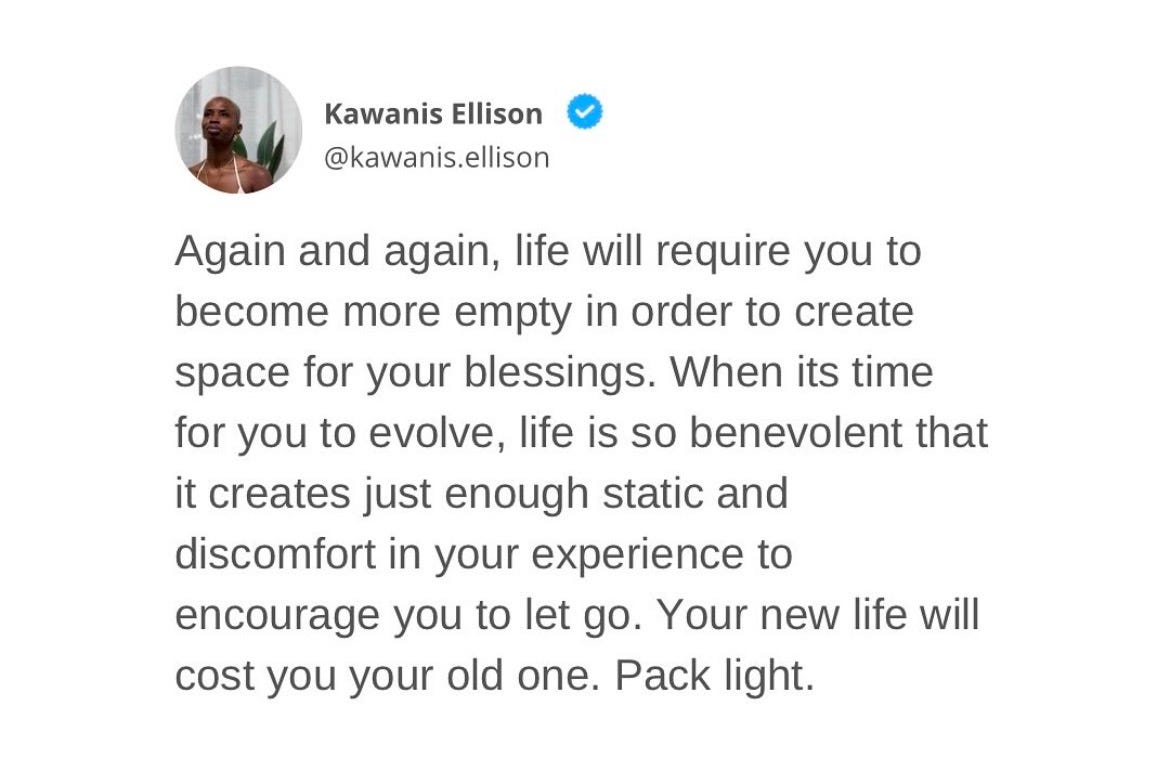
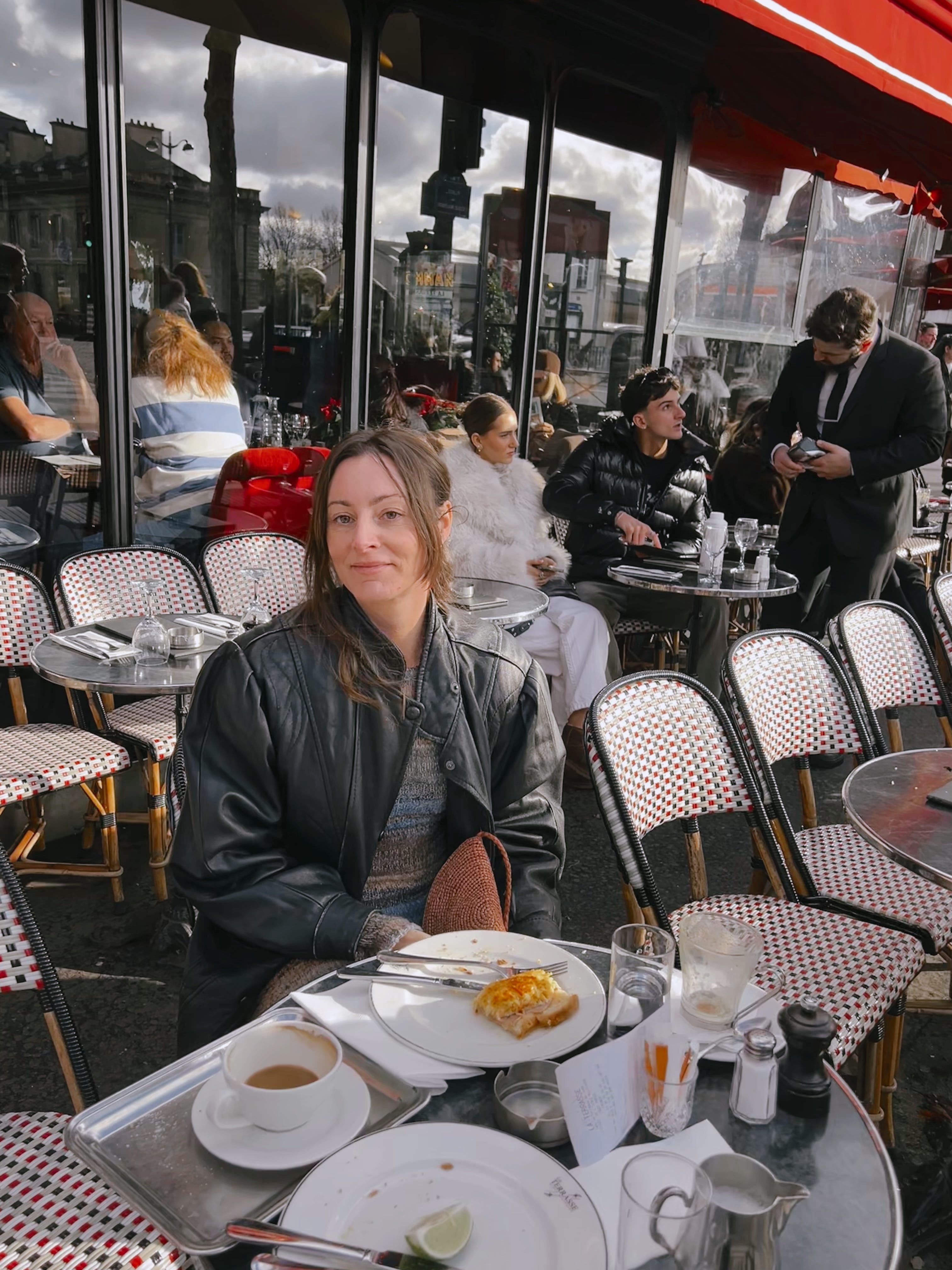
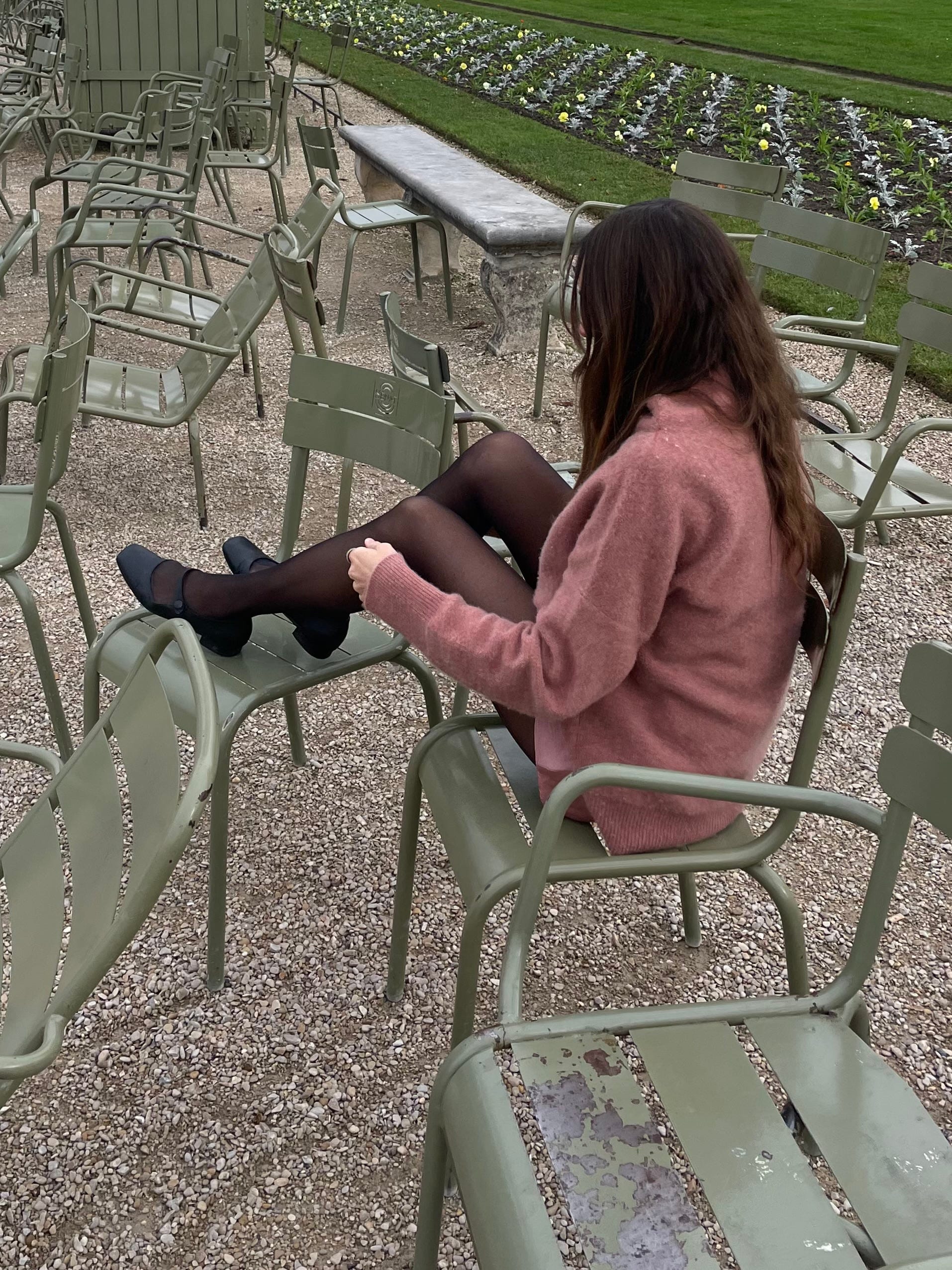
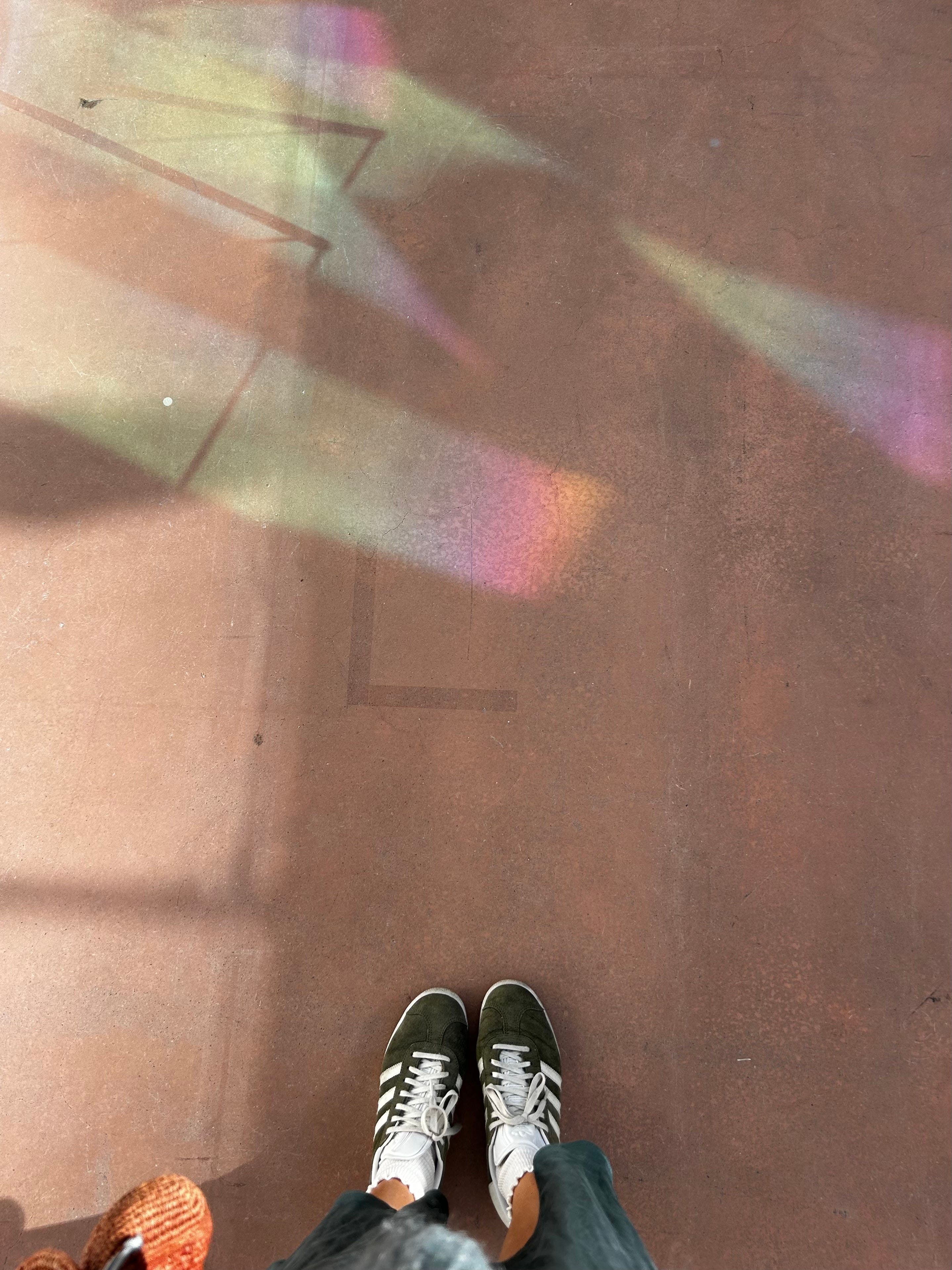



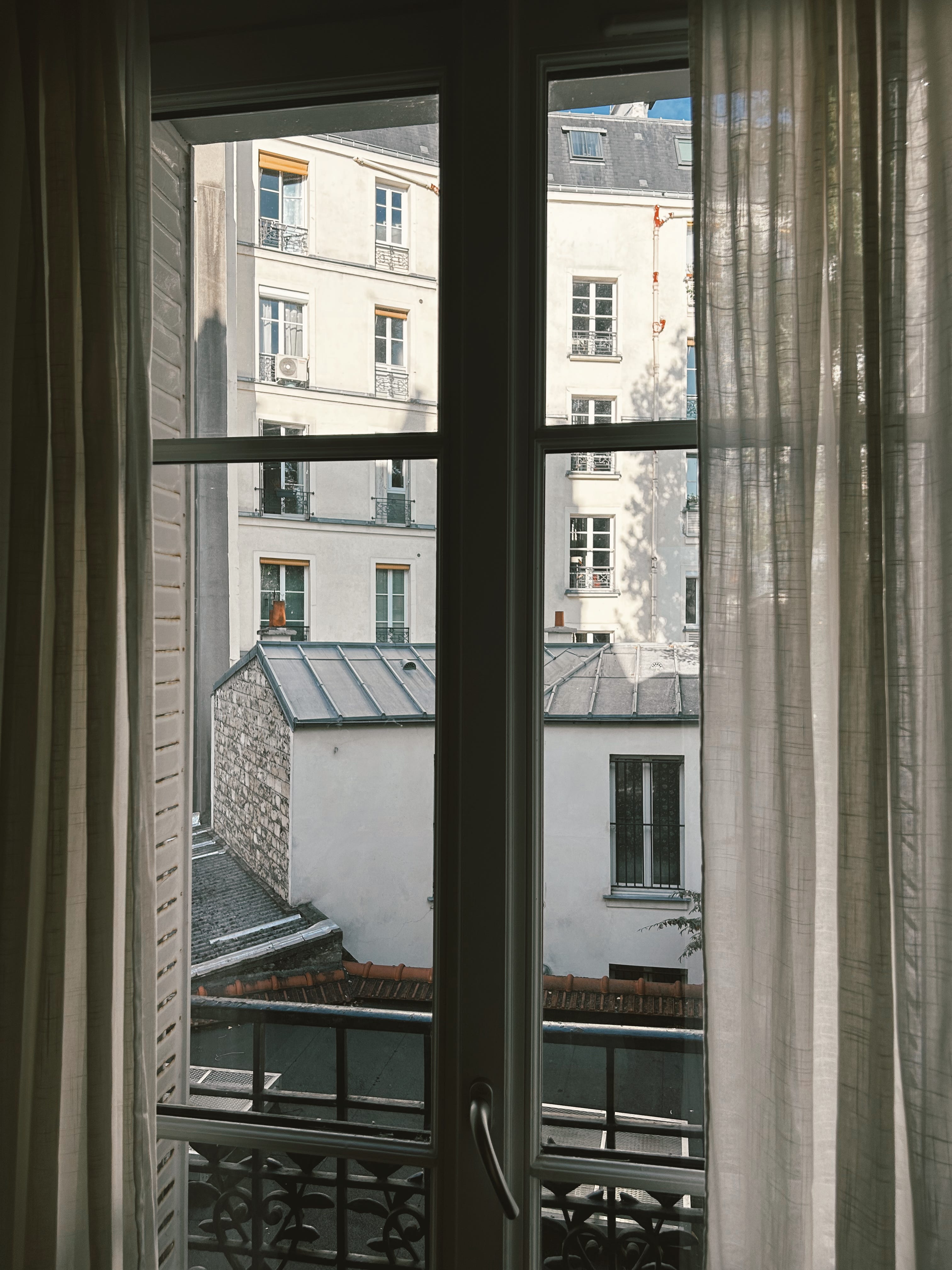
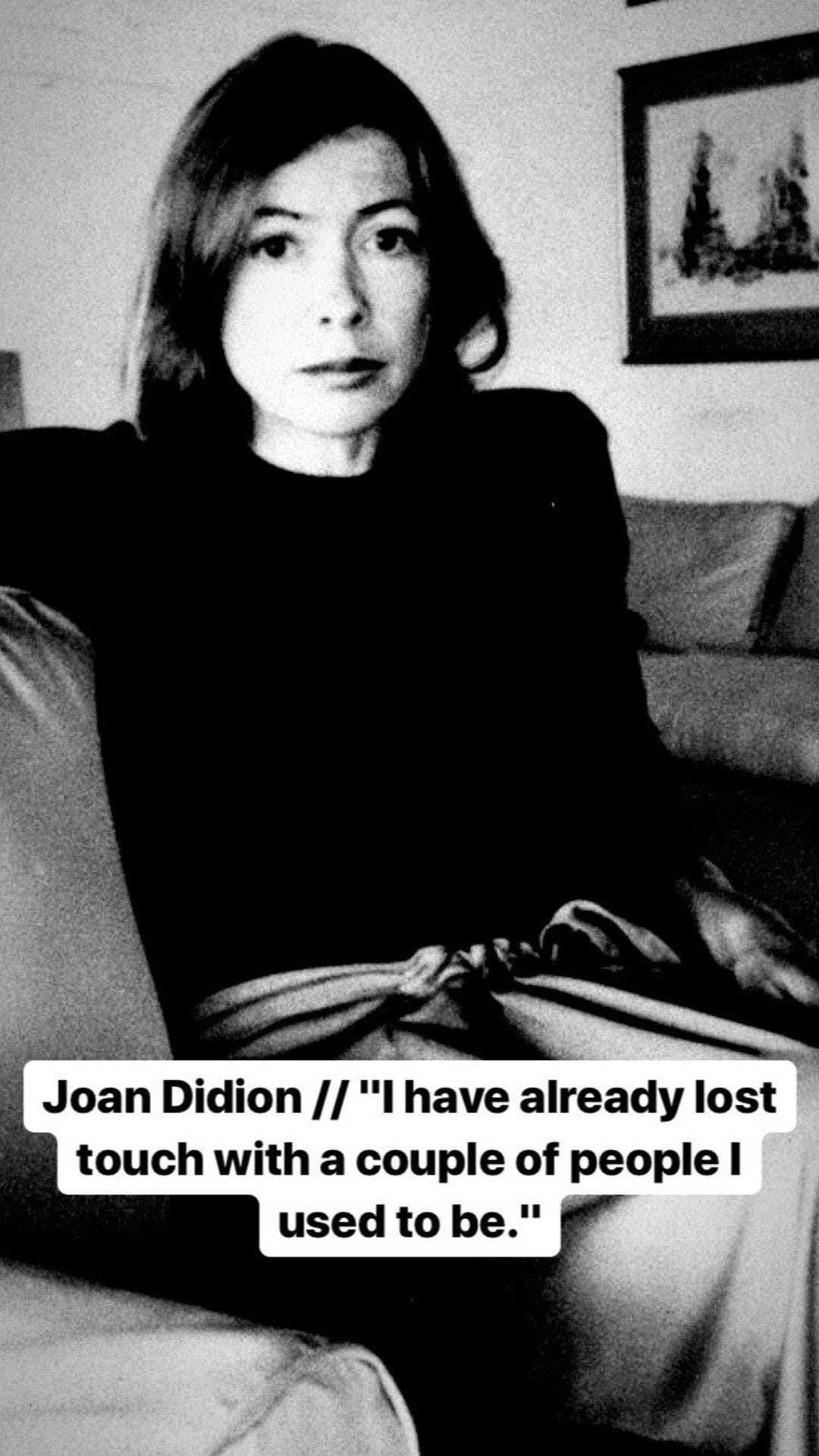
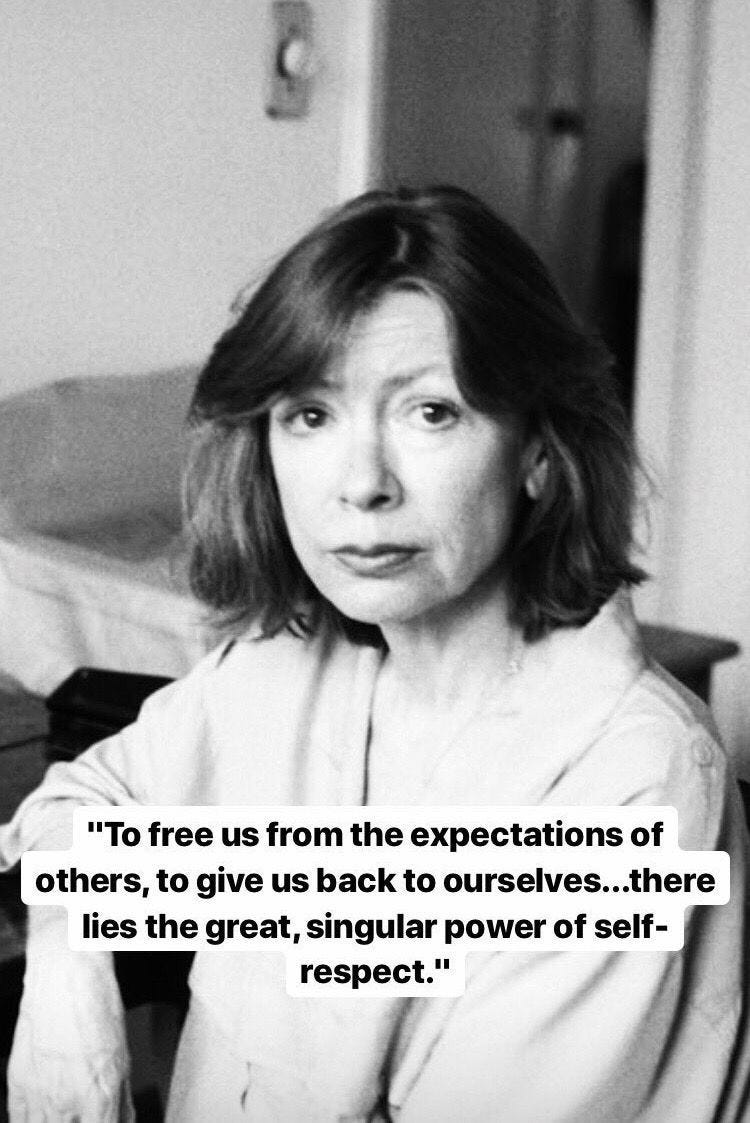
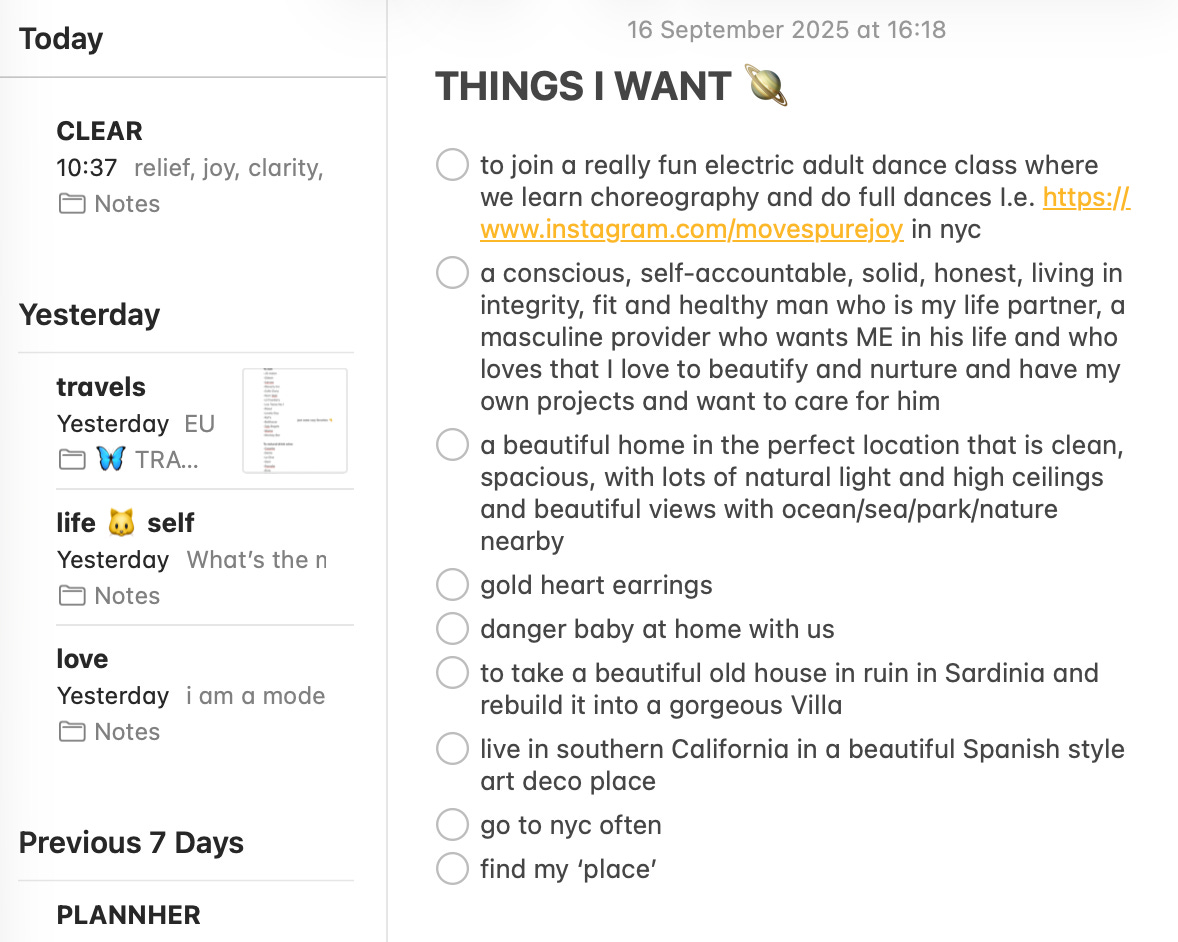

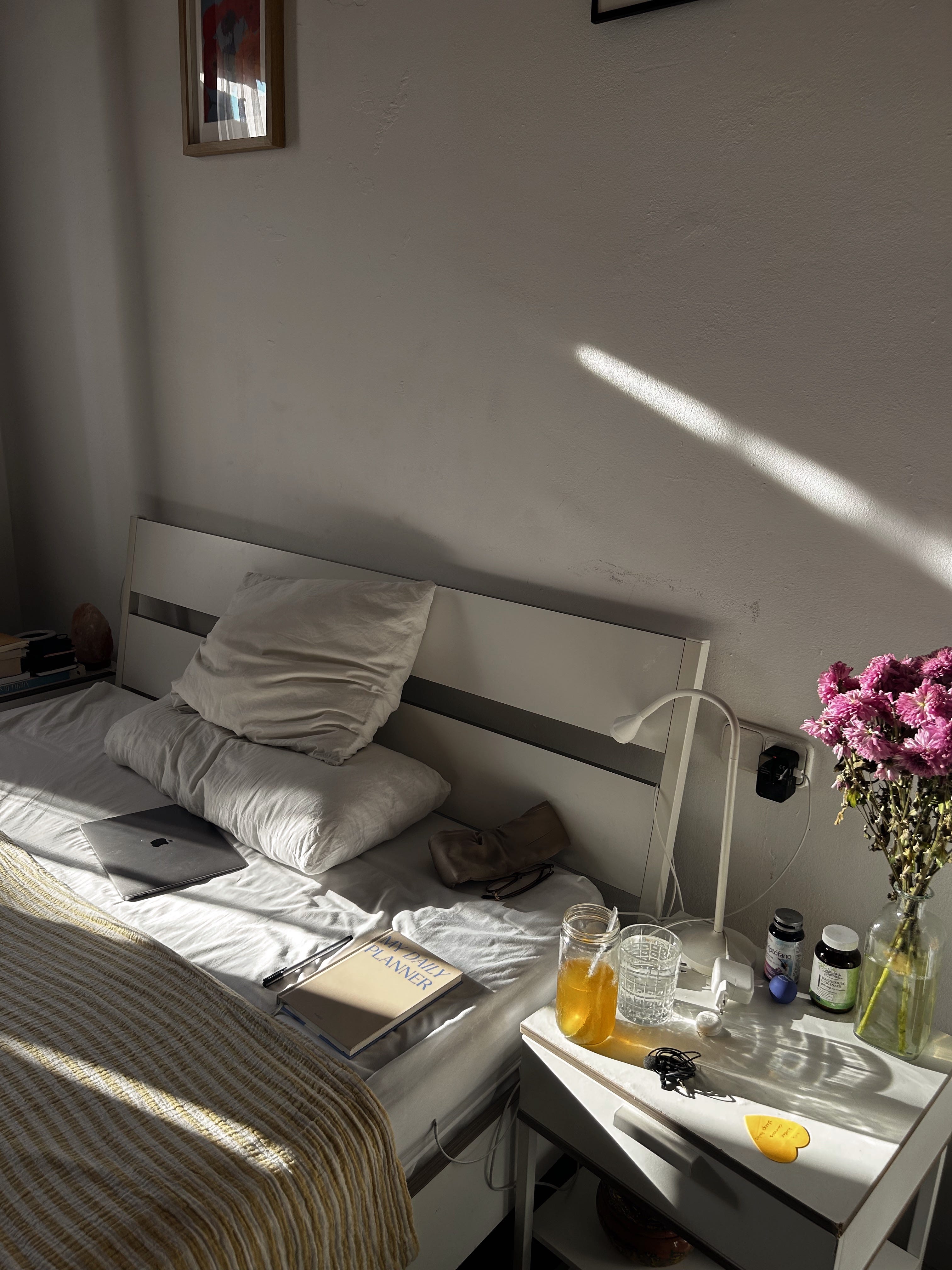
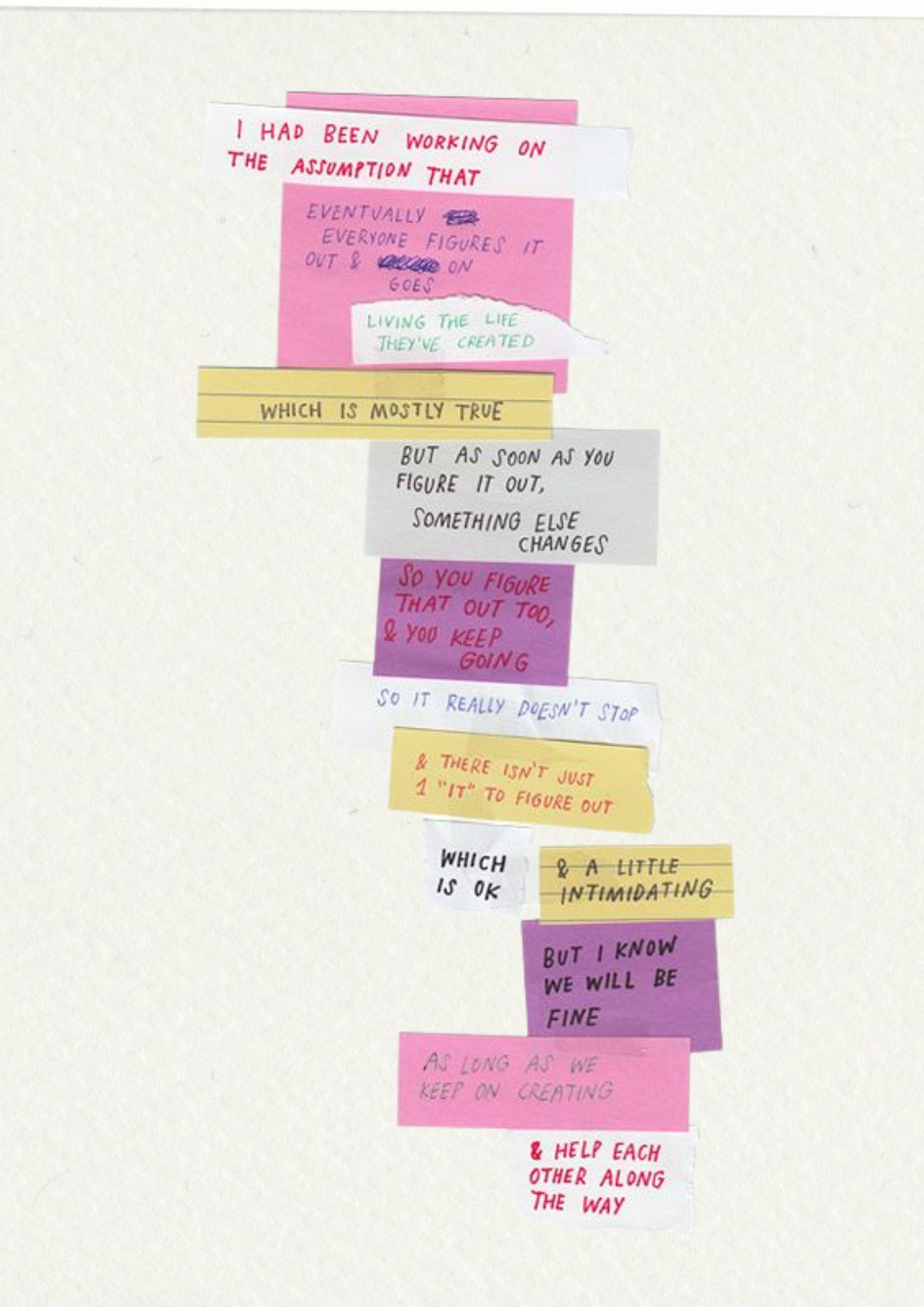

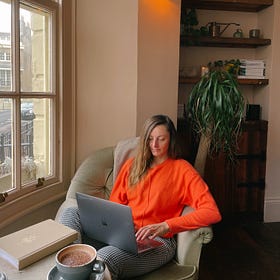
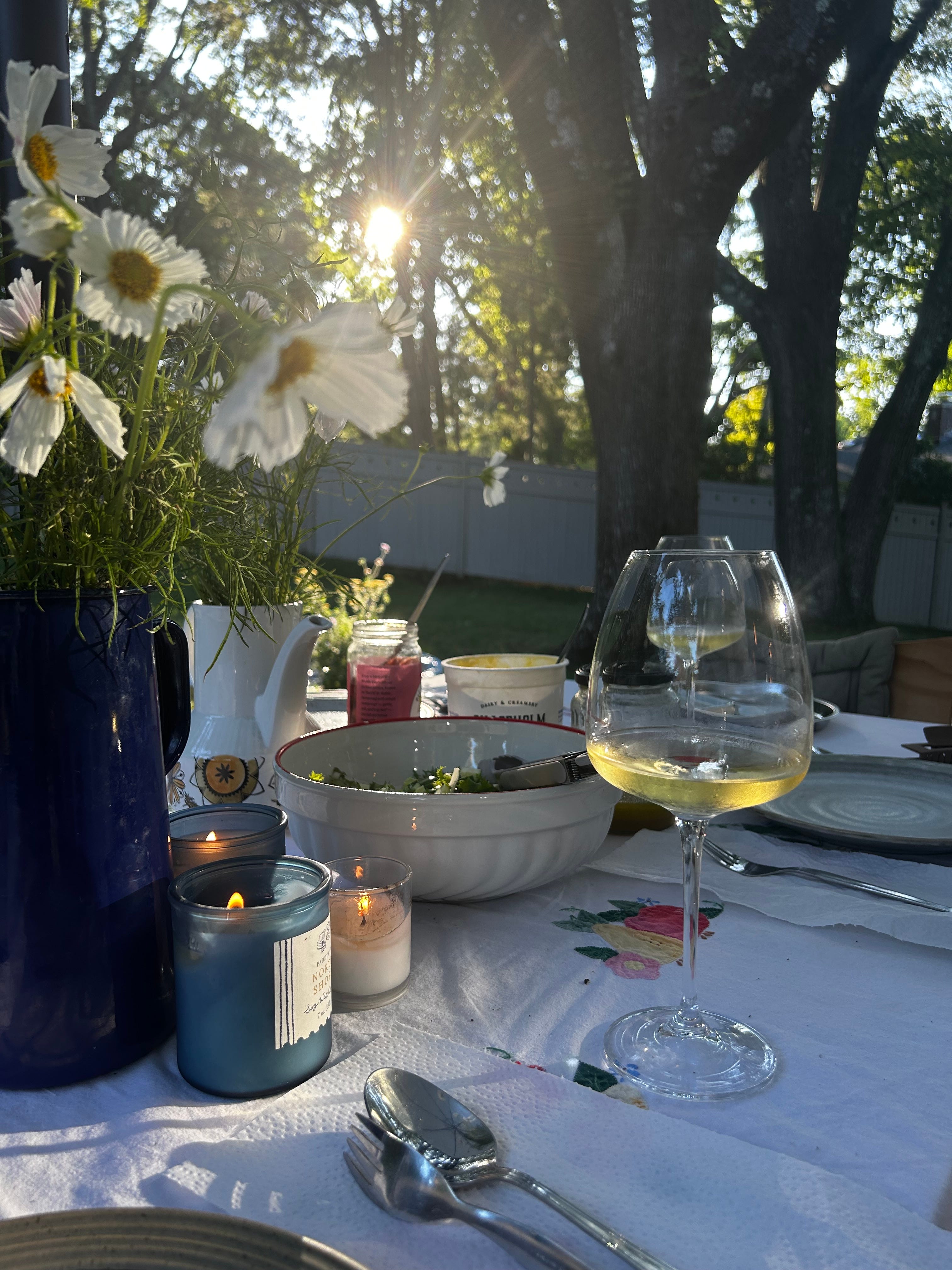
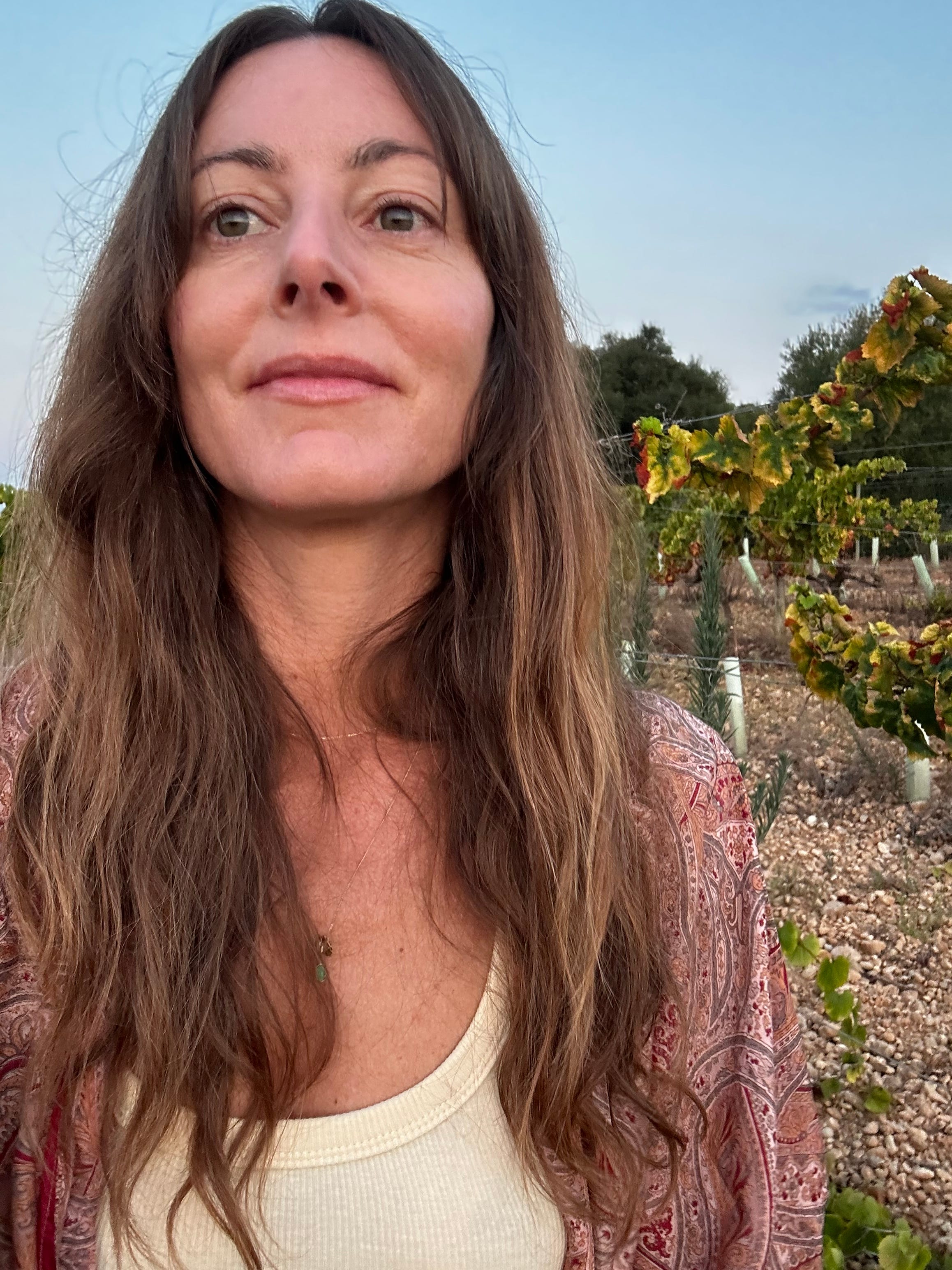
 Vienda Maria